You see a word like “Merfez” in a search result, a social post, or a design article and assume there must be a clean definition waiting somewhere. Maybe it’s a fabric. Maybe a fashion label. Maybe a new aesthetic with a very specific look.
Here’s the catch: the evidence doesn’t support one neat answer.
Merfez currently functions more like a context-dependent name than a universally defined fashion term. The clearest verifiable use is as a name associated with online publishing sites, while recent web pages also attach the word to handcrafted home textiles, lifestyle ideas, technology concepts, and even travel claims. Those uses do not appear to come from one established dictionary definition, one recognized fashion movement, or one documented textile tradition.
For fashion readers, that distinction matters. A word can circulate around style and textiles without becoming accepted fashion terminology.
What Is Merfez?
Merfez is an uncommon name or label used online in several unrelated contexts. There isn’t one universally accepted definition that can be verified from established reference sources. Current evidence supports treating Merfez as context-dependent: what it means depends on the specific website, product description, or discussion where you encounter it.
One concrete use is digital publishing. On its Modern Applications page, Merfez.org describes Merfez as a platform publishing material about technology, business, finance, artificial intelligence, software, cybersecurity, online tools, and educational subjects. The page also acknowledges that the exact origin of the name is not widely documented.
A separate Merfez.co.uk contact page describes that site as a place for articles, guides, and everyday knowledge. So there is direct evidence for the name being used by online publishing properties, rather than one exclusively fashion-related entity.
The broader meanings are less settled.
Across 2026 search results, other pages describe Merfez as an artisan-textile brand, a cozy home-design idea, a productivity framework, a lifestyle philosophy, or a travel destination. The problem is that these descriptions frequently conflict, and many don’t point readers to strong primary documentation.
The practical way to understand Merfez is to identify the context first and the claim second. Don’t assume every page using the word is talking about the same entity.
Why Are People Seeing Merfez in So Many Different Contexts?
The current search landscape itself appears to be reinforcing the ambiguity. Many recently published pages start from the idea that Merfez has no fixed meaning, then present several possible interpretations involving publishing, home design, creativity, technology, lifestyle, or travel. That repetition can make the term look more standardized than the underlying evidence supports.
Repetition is not the same thing as verification.
A distinctive name can travel between sites because different publishers adopt it, because writers target the same emerging query, or because later pages repeat descriptions found elsewhere. Without an authoritative linguistic record, a documented creator, a recognized trade definition, or a clear primary brand source, it’s risky to turn that repetition into a confident history lesson.
One thing that stands out in the current results is how many pages catalogue numerous meanings without ranking them according to evidence. A digital platform, an aesthetic philosophy, a Turkish destination, and an artisanal rug tradition are treated as if they were equally established interpretations. They aren’t.
That evidence hierarchy is one of the most useful ways to make sense of Merfez.
Is Merfez a Fashion Term?
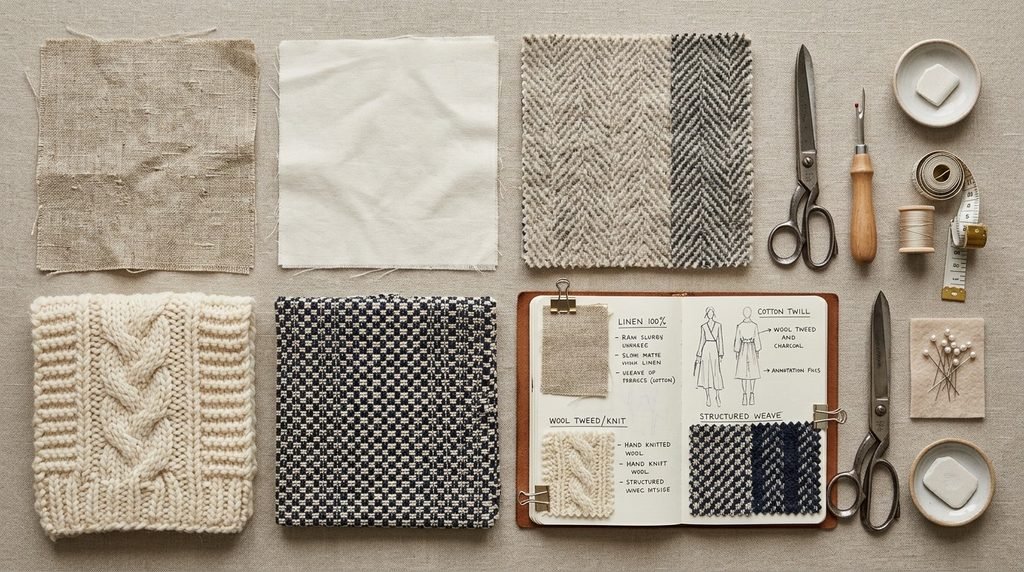
No established fashion-industry definition for Merfez could be verified in the sources reviewed. The word does appear in fashion-adjacent discussions because several recent pages connect it with textiles, rugs, woven throws, natural fibers, craftsmanship, and a handmade aesthetic. Those references, however, are primarily about home décor rather than apparel.
That difference is easy to miss.
Textiles belong to both fashion and interiors. Cotton, wool, linen, weaving, dyeing, texture, and craft techniques can be relevant to clothing as well as home goods. Yet a textile-related article does not automatically make the label it uses a recognized fashion term.
For Merfez specifically, available evidence doesn’t establish it as:
- a standardized fiber name;
- a recognized weave or knit structure;
- a documented dyeing or finishing technique;
- a widely recognized apparel category;
- an established fashion movement;
- or a verified heritage craft tradition.
That doesn’t mean nobody can use Merfez as a brand name, collection name, or creative label. It means the word itself shouldn’t be treated as technical fashion vocabulary without additional proof.
What About Claims That Merfez Is an Artisanal Textile Brand?
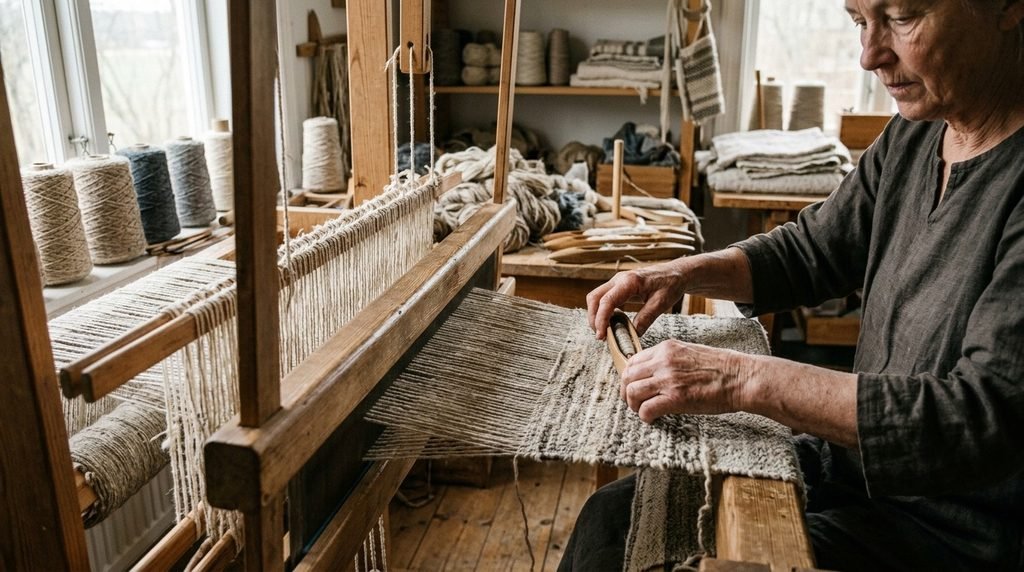
Some current pages explicitly present Merfez as handcrafted home textiles. Those descriptions commonly mention rugs, throws, woven materials, natural fibers, texture, and traditional craftsmanship. What the available evidence does not clearly establish is whether those repeated descriptions trace back to one independently verifiable textile business or recognized product category.
A Palentu article, for example, calls Merfez “a line of artisanal textiles” and describes handcrafted products intended for interiors. Other publishers repeat similar narratives about rugs, throws, wool, cotton, linen, and artisan production.
The evidence level remains limited.
The pages reviewed did not establish one clearly documented fashion or textile company with an authoritative official catalog, transparent ownership, manufacturing documentation, or recognized industry standing sufficient to make “Merfez textiles” a standardized category.
That’s significant because words such as “handmade,” “artisan,” “sustainable,” “traditional,” and “natural” carry real expectations for shoppers. Those qualities should be proven at the product level rather than inferred from evocative branding.
From a fashion perspective, the most useful interpretation is cautious: Merfez may be used as a brand-like or aesthetic label in textile-related content, but it is not currently verified as a standardized textile term.
Merfez Contexts: What’s Documented and What Isn’t?
| Context | What current pages suggest | Evidence level | What readers should know |
| Digital publishing | Merfez is used by content websites publishing technology, business, tools, and general information | Strongest direct evidence | This is a verifiable present-day use of the name |
| Home textiles and décor | Some pages describe rugs, throws, woven fabrics, natural fibers, and artisan craftsmanship | Repeated secondary claims | Treat it as a page- or seller-specific label unless a primary brand source proves more |
| Fashion/apparel | The term is pulled into some style or textile discussions | Weak | No established apparel or fashion-industry definition was verified |
| Lifestyle/aesthetic concept | Some articles associate it with simplicity, creativity, authenticity, or intentional living | Interpretive | These are emerging interpretations rather than a formal definition |
| Technology framework | Some pages present Merfez as a digital platform, framework, or integration concept | Conflicting | Verify the specific platform and documentation before treating it as technical terminology |
| Travel destination | Several pages describe a place called Merfez | Poorly supported | Reliable geographic or official tourism evidence should come before accepting destination claims |
Here’s where things get interesting. This table isn’t really a list of “six meanings.”
It’s a hierarchy of claims.
The digital-publishing use has direct source support. Textile and lifestyle uses are plainly visible online but less firmly documented. Travel and generalized technical-framework stories require even more skepticism.
That evidence-first approach is more useful than pretending every repeated meaning has equal status.
Is Merfez the Same as a Fez?
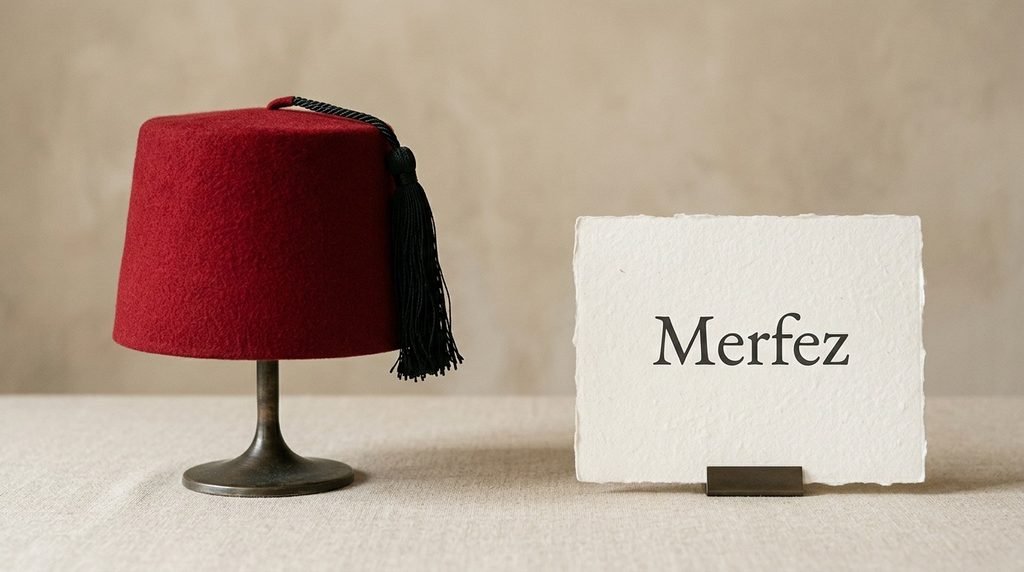
No. “Fez” is an established English word for a brimless hat, traditionally associated with parts of the eastern Mediterranean. Merfez is a different spelling, and no reliable evidence reviewed here establishes Merfez as another name for the fez. Their visual similarity is not enough to make them interchangeable fashion terms.
The Merriam-Webster entry for “fez” defines the garment and traces its known English usage to around 1803.
For fashion readers, that’s a useful comparison. The fez has a documented accessory meaning and linguistic history. Merfez currently does not have the same type of established reference record.
Similar spelling is not etymology.
What Does Merfez Mean for Fashion and Design Readers?
For most fashion readers, Merfez is best treated as a label that needs context rather than a trend you must learn to keep up with style. If someone uses Merfez aesthetically, look for observable design characteristics instead of assuming the word itself carries a fixed visual language.
Ask what the writer or seller is actually describing.
Is it a rug? A woven throw? A fabric? A color palette? A website? A clothing collection? Those aren’t interchangeable categories.
If a writer uses “Merfez style” to describe an aesthetic, see whether that aesthetic can be defined through specific choices such as:
- fiber or material;
- weave, knit, embroidery, or surface technique;
- silhouette or garment construction;
- color palette;
- pattern language;
- production method;
- cultural or geographic source;
- or a named designer, studio, or brand.
Without those specifics, “Merfez style” may be doing more mood-setting than explaining.
That doesn’t make creative language useless. Fashion has always absorbed invented names, subcultural labels, brand terms, and shorthand for emerging aesthetics.
Good fashion journalism simply keeps two questions separate: Is somebody using this label? And is the label an established category?
For Merfez, the answer to the first is yes. The second remains unproven.
How Can You Tell Whether a Merfez Claim Is Reliable?
Start with the specific claim, then ask what kind of source should be able to prove it. A brand claim needs a primary brand source. A historical claim needs historical evidence. A textile claim should identify materials or production methods. A travel claim needs reliable geographic confirmation. Generic repetition across blogs isn’t enough.
A practical verification process looks like this:
- Identify the entity. Is Merfez being presented as a company, product, concept, place, or style?
- Find the primary source. Who actually owns, makes, documents, or officially defines it?
- Check the evidence type. A blog post can prove that a claim is circulating; it cannot automatically prove the claim itself.
- Look for concrete details. Materials, origin, maker, dimensions, construction, certifications, and care instructions are more useful than atmospheric descriptions.
- Watch for recycled certainty. If many pages repeat the same story but none leads back to original evidence, repetition should not increase your confidence.
The biggest warning sign is a highly specific heritage, cultural, scientific, or commercial story attached to very thin sourcing.
What Should U.S. Shoppers Check If Merfez Appears on a Textile or Clothing Listing?
Treat Merfez as a name, not a quality guarantee. For U.S. shoppers, the useful information is still what tells you what an item is made from, where it came from, who is responsible for marketing it, how it was constructed, and how it should be cared for.
The Federal Trade Commission’s apparel and textile guidance says most textile and wool products sold in the United States must include labeling identifying fiber content, country of origin, and the manufacturer or another responsible business.
For covered wearing apparel, the FTC’s Care Labeling Rule also requires manufacturers and importers to provide instructions for proper care.
So if you encounter a “Merfez” garment, textile, rug, or décor item, look beyond the name and check:
- actual fiber percentages;
- country of origin;
- manufacturer, importer, or responsible marketer;
- care information where applicable;
- construction details;
- dimensions or sizing;
- return policies;
- and evidence behind claims such as “handmade,” “organic,” “artisan,” or “traditional.”
A stylish coined name can be part of branding. It shouldn’t substitute for basic product transparency.
Does Merfez Have a Verified Origin or History?
No well-documented linguistic origin was established in this research. Several recent articles speculate about Turkish or Arabic connections, while others build broader cultural or historical stories around the word. Those ideas should remain hypotheses unless supported by credible linguistic, archival, or primary-source evidence.
Merfez.org itself states that the name’s exact origin isn’t widely documented.
That is a more defensible position than confidently assigning a heritage to the term.
Some pages suggest a relationship with Turkish words that merely resemble Merfez, but similarity alone does not demonstrate etymology. Other pages describe ancient settlements, inherited craft traditions, or cultural movements without supplying the kind of documentation those claims would require.
Available evidence therefore doesn’t establish an ancient craft lineage, historic fashion movement, or universally recognized cultural meaning for Merfez.
If stronger primary documentation emerges later, the interpretation can change. For now, uncertainty is part of the accurate answer.
What Merfez Does—and Doesn’t—Mean Right Now
Merfez is currently best understood as a context-dependent online name whose meaning changes between sources. A digital-publishing use can be directly verified; fashion, lifestyle, home-textile, technical, and travel interpretations vary considerably in evidentiary strength.
Merfez does appear to be:
- a current online name used by publishing websites;
- a keyword appearing across numerous 2026 articles;
- a label some writers associate with home textiles, design, lifestyle, and creative ideas.
Merfez does not currently appear to be verified as:
- a standard English fashion term;
- a recognized fiber, fabric, weave, or garment type;
- a single universally defined aesthetic;
- a documented heritage textile tradition;
- or one clearly established fashion brand that explains every use of the word online.
That’s less dramatic than many of the definitions circulating around the web.
It’s also much more useful.
FAQ / QUICK ANSWERS
Does Merfez have an official meaning?
Not one that could be verified as a universally accepted dictionary, fashion-industry, textile, or academic definition. The term is currently used in multiple contexts, so the source and surrounding discussion matter more than the word alone.
Is Merfez a fashion brand?
A single established fashion brand corresponding to every online use of Merfez was not verified. Some recent pages call Merfez a home-textile or artisan brand, but the evidence reviewed doesn’t justify treating that description as a universal identity for the term.
How is Merfez connected with fashion?
Mostly indirectly. Recent online content connects the term with textiles, natural fibers, weaving, rugs, throws, craftsmanship, and aesthetics. Those are design- and textile-related subjects, but they don’t establish Merfez as a recognized apparel category or fashion movement.
Is Merfez a type of fabric?
No reliable evidence reviewed establishes Merfez as a standard fiber, fabric construction, weave, knit, or textile-finishing term. If a seller uses the name on a textile product, check the actual fiber-content and construction information.
Is Merfez another spelling of fez?
No verified evidence supports that interpretation. “Fez” has its own established dictionary definition referring to a particular style of hat. Merfez should be treated separately unless a specific source can demonstrate a connection.
Why do different websites give Merfez different definitions?
Because the term currently behaves more like a flexible name or emerging keyword than standardized vocabulary. Some sites use it for publishing, others assign it to textiles, lifestyle concepts, technology, or travel. Context and source quality are therefore essential.
CONCLUSION + CTA
The most useful thing to know about Merfez isn’t a glamorous origin story or a supposedly definitive aesthetic. It’s that the term is still unstable.
There is clear evidence for Merfez being used as an online publishing identity. There is also visible but less conclusive usage around textiles, home design, lifestyle, and other topics. What the evidence doesn’t establish is one universal fashion meaning, one standardized fabric definition, or one documented heritage behind every appearance of the name.
For fashion readers and shoppers, that leaves a straightforward rule: follow the evidence behind the label. Look for actual fibers, construction, makers, origins, and primary documentation before treating unfamiliar terminology as an established trend or product category.
For more fashion-focused reading as the site develops, you can visit the FashionDew homepage.