You know the moment: the jeans look good, the T-shirt is fine, but the outfit feels one step short of finished. You grab a blazer—and suddenly you’re wondering whether you look ready for Saturday lunch or an 8:30 a.m. staff meeting.
That tension is exactly why Casual Blazer Outfits can be surprisingly tricky. A blazer brings structure automatically, so everything surrounding it changes how formal that structure appears.
The good news is that you don’t need a special “casual blazer wardrobe.” In most cases, the easiest formula is a blazer plus one polished element and two or three visibly relaxed ones: denim, a simple tee, flat shoes, an easy bag, or softer tailoring. The real skill is knowing which details change the mood.
The Quick Answer
To style a blazer casually, pair its tailored structure with relaxed pieces such as straight-leg jeans, a crewneck T-shirt, sneakers, flats, or loose trousers. Softer shoulders, textured fabrics, uncomplicated layers, and non-matching bottoms also reduce formality. For a sharper version, keep the outfit casual but swap sneakers for loafers or streamlined boots.
What Actually Makes a Blazer Look Casual?
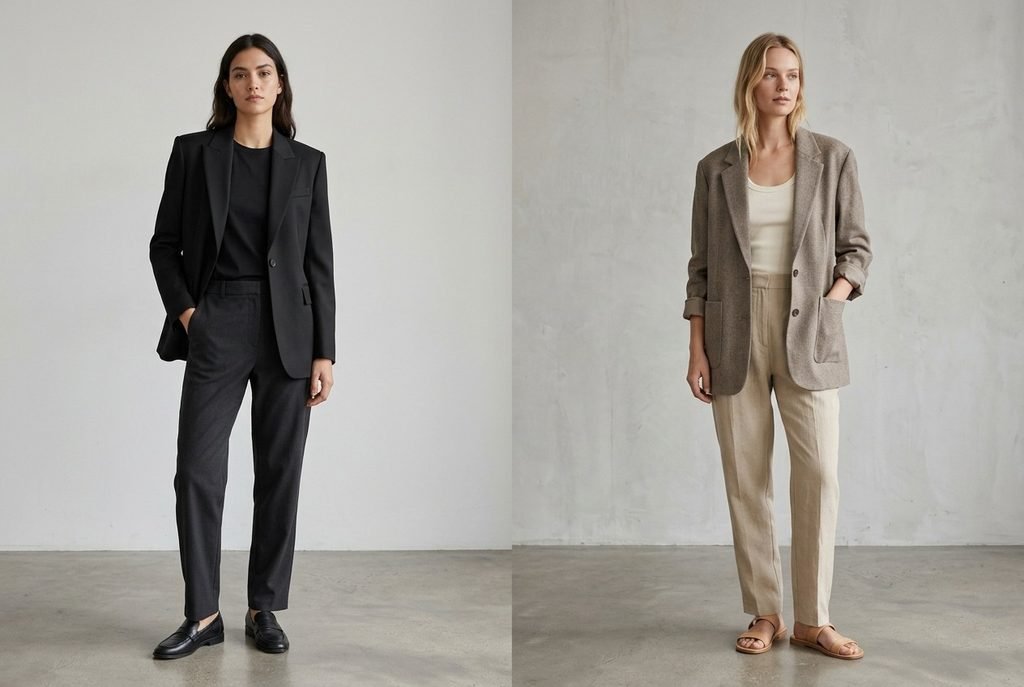
A blazer looks casual when the entire outfit contains enough relaxed visual cues to counterbalance the tailoring.
Think of formality as something the whole outfit creates—not a permanent property of the blazer. A sharp black jacket, silk blouse, matching trousers, structured handbag, and pointed pumps all reinforce one another. Change the trousers to faded denim and the blouse to a cotton tee, and the same jacket starts telling a different story.
Several details matter.
Shoulder construction: A strong, padded shoulder creates a cleaner architectural line and generally reads sharper. Softer or more natural shoulders tend to integrate more easily with casual clothes.
Fabric and texture: Smooth, crisp suiting fabrics often look dressier than linen, brushed wool, cotton twill, corduroy, or visibly textured weaves. That doesn’t mean you can’t casualize a polished blazer; you’ll simply need more contrast elsewhere.
Blazer length: Longer jackets naturally create more visual weight. They work especially well over slim, straight, or moderately wide bottoms. Cropped jackets expose more of the waist and can work well with high-rise trousers, full skirts, or wide-leg jeans.
Lapel and closure: Broad lapels and double-breasted fronts make more of a statement. Narrower or softer lapels and relaxed single-breasted cuts can disappear into an everyday outfit more easily. Neither option is inherently better.
What surrounds it: Jeans, sneakers, tees, ribbed tanks, knitwear, canvas totes, relaxed trousers, and uncomplicated jewelry all pull tailoring toward the casual end of the spectrum.
A useful rule: if almost every other piece could comfortably appear in a weekend outfit without the blazer, you’re probably on the right track.
Casual Blazer Outfits You Can Copy and Adjust
You don’t have to overthink it. Start with a formula, then change one piece according to the weather, occasion, or silhouette you prefer.
1. Navy blazer + white crewneck tee + straight-leg jeans + white sneakers
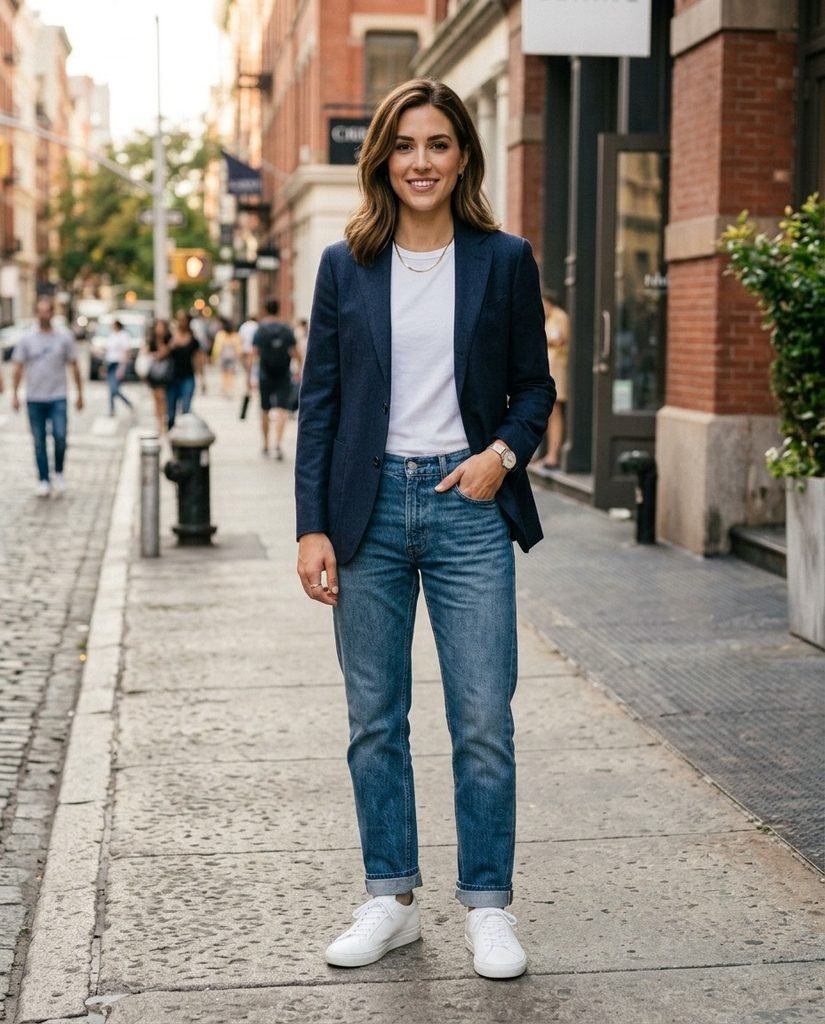
This combination works because the blazer supplies the structure while the tee, denim, and sneakers all move in the opposite direction.
Mid- or light-wash jeans make the contrast particularly clear. Dark, pristine denim will look a little sharper, which can be useful for a casual dinner or workplace where jeans are acceptable.
Wear it for lunch, errands, sightseeing, a casual meeting, or dinner somewhere that doesn’t require formal dress.
Try these swaps: Change white sneakers to loafers for more polish, or switch the white tee to gray for a quieter, lower-contrast palette.
2. Camel blazer + black tank + dark straight jeans + loafers
Here, the color combination does much of the work. Camel warms up black, while denim prevents the blazer-and-loafer pairing from becoming too businesslike.
A tank creates a clean vertical opening beneath the jacket without adding another collar or button placket. That matters: fewer formal details around the neckline can make a blazer feel considerably less corporate.
If loafers feel too preppy for your style, try ballet flats, minimal sneakers, or low ankle boots.
3. Oversized blazer + fitted tee + relaxed jeans + slim sneakers
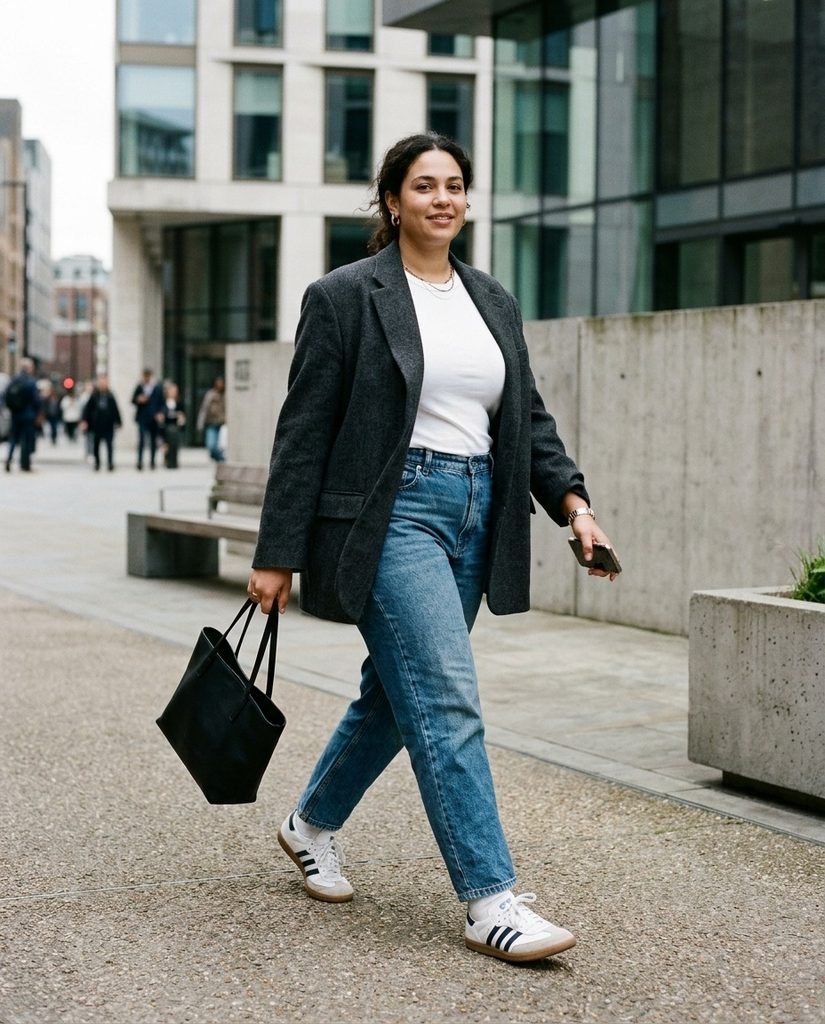
An oversized blazer already brings volume, so a relatively close-fitting inner layer keeps the outfit from feeling bulky from shoulder to ankle.
The jeans don’t need to be skinny. Straight, relaxed, or gently wide-leg denim can all work. The key is creating at least one clean line somewhere—through the fitted tee, visible waist, cropped hem, or streamlined shoe.
If both the jacket and jeans are very wide, a chunky shoe adds even more visual weight. Sometimes that’s exactly the look you want. If it feels overwhelming, try a lower-profile sneaker or expose a little more ankle.
4. Gray blazer + striped tee + blue jeans + black flats
A striped tee introduces pattern without making the outfit complicated.
This combination is particularly useful when plain basics feel flat but you don’t want a statement blazer. The gray jacket and denim behave almost like neutrals, leaving the stripes to create movement.
A crossbody bag keeps the mood casual. A structured top-handle bag would push the same clothes a little dressier.
5. Black blazer + graphic tee + faded jeans + sneakers
A black blazer can easily become formal, so stronger casual contrast helps.
A graphic tee and washed denim break up the severity of the black jacket. Keep the graphic relatively simple if you’d like the outfit to feel grown-up rather than busy.
For dinner, switch sneakers for a low boot or sleek flat. For daytime, keep the sneakers and add a practical tote.
6. Linen blazer + tank + loose trousers + flat sandals
Warm-weather tailoring works best when the entire outfit acknowledges the temperature.
A relaxed linen blazer over a tank creates shape without requiring several layers. Loose trousers continue the movement, while flat sandals stop the combination from looking like a summer suit.
There’s one catch: if the blazer and pants are nearly identical in color, weave, and finish, they may visually reconnect as suit separates. That can look great, but if your goal is casual, create separation with contrasting footwear, an obvious cotton tank, or a different trouser texture.
7. Cropped blazer + simple top + high-rise wide-leg jeans + flats
A shorter jacket changes the proportion rather than simply making the outfit “more fashionable.”
Because the hem ends higher, more of the trouser rise and leg line remain visible. That can be useful with fuller jeans that might otherwise compete with a long blazer.
If you don’t enjoy cropped silhouettes, use a regular hip-length jacket and choose straight-leg denim instead. There is no universal correct proportion; the goal is visual coherence and comfort.
8. Blazer + simple midi dress + sneakers
A blazer can make a casual dress more useful when the weather cools or the occasion calls for a little more structure.
The important distinction is footwear. Sneakers or flat sandals keep the outfit grounded in daytime territory. Pumps and a formal bag can quickly turn the same dress-and-blazer pairing into occasion dressing.
A blazer that ends well above or below the widest part of the skirt often creates a cleaner visual break than one ending at exactly the same point.
9. Brown blazer + cream knit + dark denim + ankle boots
This is an easy fall formula because the tonal temperature is consistent: brown, cream, and deep denim feel visually connected without matching.
Use a relatively fine knit rather than forcing a chunky sweater into a close-fitting blazer. If the sleeves, upper back, or lapels pull once the knit is underneath, the jacket simply doesn’t have enough room for that layer.
10. Blazer + T-shirt + relaxed trousers + sneakers
Jeans aren’t required.
Relaxed trousers work when you want the comfort of a loose pant without denim. Choose a T-shirt rather than a crisp button-down and sneakers rather than formal footwear if you want to keep the combination clearly casual.
If the blazer and trousers are both generously cut, consider tucking or partially tucking the tee. That gives the eye a point of structure between two larger silhouettes.
Which Blazer Works Best With Which Outfit?
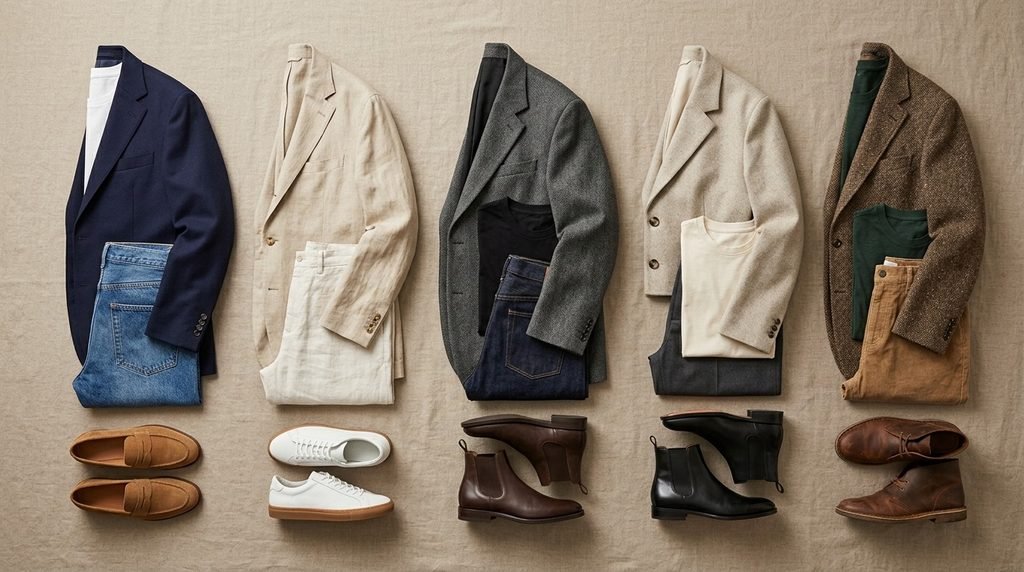
| Blazer Style | Best Pairing | Shoe Direction | Useful For | Overall Feel |
| Soft navy single-breasted blazer | Tee + straight jeans | Sneakers or loafers | Everyday wear, casual dinners | Classic but relaxed |
| Linen or linen-blend blazer | Tank + loose trousers | Sandals or minimal sneakers | Warm weather, vacations | Light and informal |
| Oversized blazer | Fitted tee + straight/relaxed denim | Slim sneaker, loafer, boot | Weekends, city outfits | Modern and roomy |
| Cropped blazer | High-rise wide-leg jeans or skirt | Flats or sneakers | Casual dinners, social plans | Defined proportions |
| Structured black blazer | Graphic/plain tee + washed denim | Sneakers or ankle boots | Day-to-night outfits | Sharper contrast |
| Textured wool blazer | Fine knit + dark denim | Loafers or boots | Fall and mild winter | Warm and polished |
The table isn’t a set of rules. Think of it as a starting point: the more structure the blazer contributes, the more you can deliberately relax the rest of the outfit.
How Should You Balance Blazer and Pant Proportions?
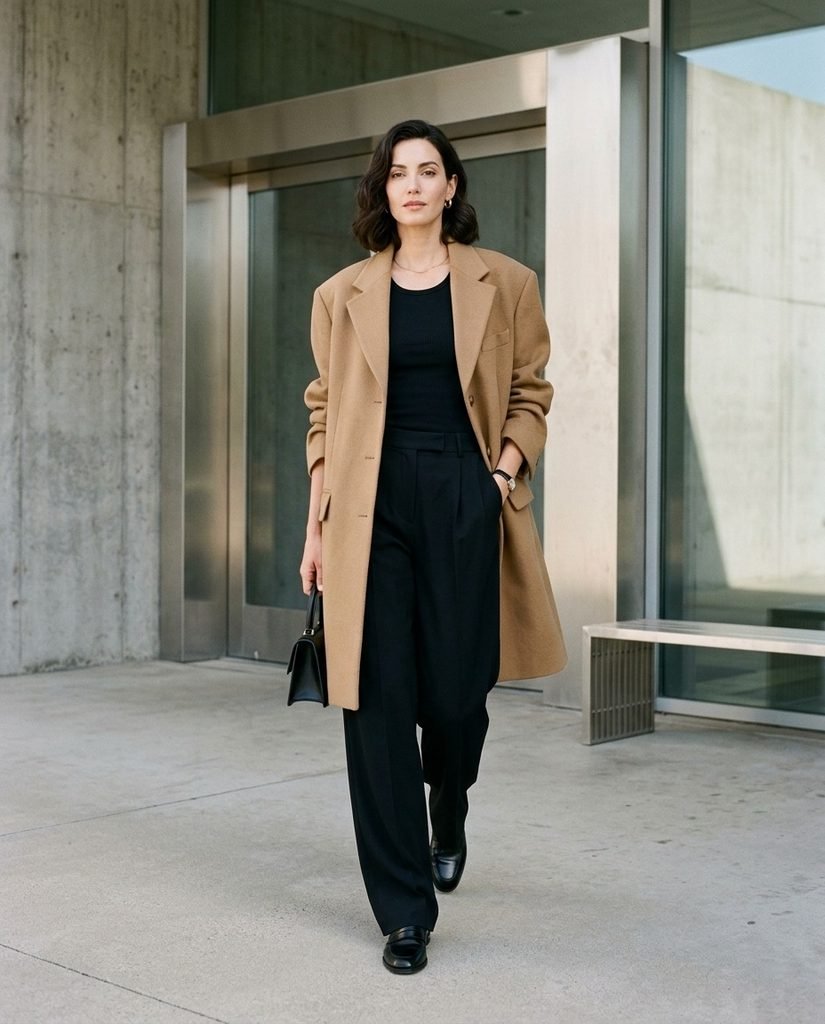
Proportion is less about hiding or “correcting” a body and more about deciding where you want visual volume.
A long oversized blazer with very wide pants creates a large uninterrupted silhouette. That can be dramatic and intentional. If you’re after something quieter, introduce definition elsewhere: choose a closer-fitting top, show the waistband, shorten the trouser break, or use a shoe with a cleaner shape.
A cropped or waist-length jacket does almost the opposite. More of the pants are visible, so the rise and waistband become important parts of the outfit.
High-rise pants plus a short blazer can emphasize the vertical length of the leg. A longer blazer over lower-rise relaxed jeans creates a slouchier line.
Pay attention to the hem, too. Trousers pooling heavily over sneakers have a very different mood from trousers that barely skim the shoe. Neither is automatically wrong—the question is whether the break looks intentional.
What if the blazer and pants are both loose?
They can absolutely work together. Give the eye one point of definition.
That might be a fitted tank, a tucked tee, a visible belt, a cropped inner layer, or a streamlined shoe. You don’t have to make one garment tight simply because another is loose.
Can You Wear Sneakers With a Casual Blazer?
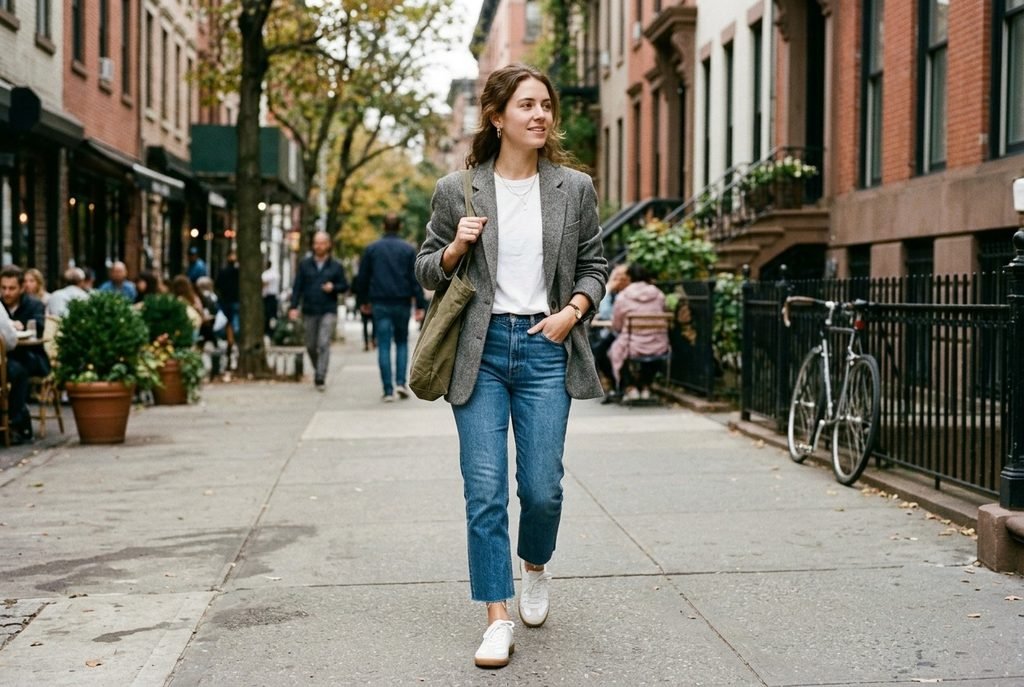
Yes. Sneakers are one of the simplest ways to reduce the formality of a blazer because the shoe changes the context of the entire outfit.
Clean, low-profile sneakers are the easiest starting point because they don’t fight with tailored lines. Chunkier athletic shoes can also work, especially with oversized blazers and wider pants, but they create a more deliberately exaggerated silhouette.
Think about the bottom half as a unit. Straight jeans and minimal sneakers are quiet. Wide pants and chunky sneakers create more volume. A blazer has to visually coexist with that choice rather than “fix” it.
What About Loafers, Flats, and Boots?
Loafers make a casual blazer outfit sharper without automatically turning it into workwear. They pair especially well with straight jeans, ankle-length trousers, and simple tees.
Ballet flats or other streamlined flats create a softer bottom line and work well with cropped jeans, skirts, and dresses.
Ankle boots add more visual weight, which can be useful in fall and winter when the jacket and clothing fabrics are heavier.
Dressier pumps can certainly work, but once you combine them with a structured blazer, tailored pants, and formal accessories, you may have crossed from casual into dressy territory. That’s fine if the occasion calls for it.
How Do You Wear a Blazer Casually in Different Seasons?
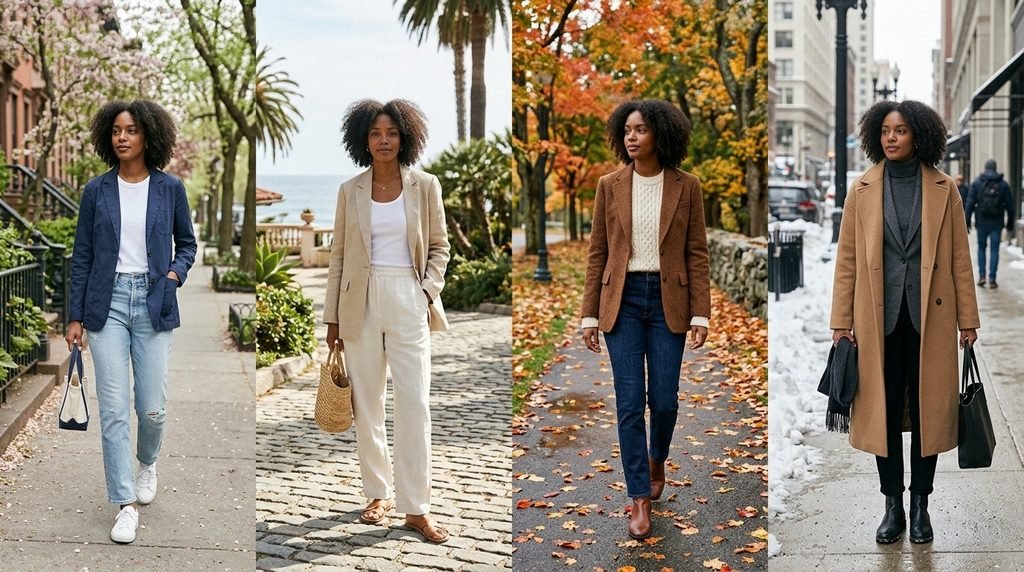
The formula stays largely the same; fabric weight and layer thickness change.
Spring
Try a lightweight blazer with a cotton tee, straight jeans, and sneakers. Cream, navy, gray, soft brown, and muted color all transition easily between cool mornings and warmer afternoons.
Summer
Prioritize breathing room: relaxed construction, an uncomplicated tank or tee, loose trousers, dresses, or shorts where appropriate.
Linen’s visible texture can also make tailoring appear less pristine and therefore more relaxed.
Fall
This is prime layering territory. Add fine-gauge knits, darker denim, loafers, or ankle boots.
A wool or wool-blend blazer can be useful in cooler weather; wool fibers can manage moisture vapor and trap insulating air within their structure, although comfort ultimately depends on the specific garment construction, weight, lining, and climate. Woolmark’s explanation of wool breathability and insulation
Winter
In genuinely cold US climates, think of the blazer as an indoor or middle layer rather than your only outerwear.
Wear a fine knit underneath, then add a sufficiently roomy coat over the blazer. Thick sweaters can work, but only if the blazer has enough space through the armhole, shoulders, sleeves, and back.
Can a Casual Blazer Work for Business Casual?
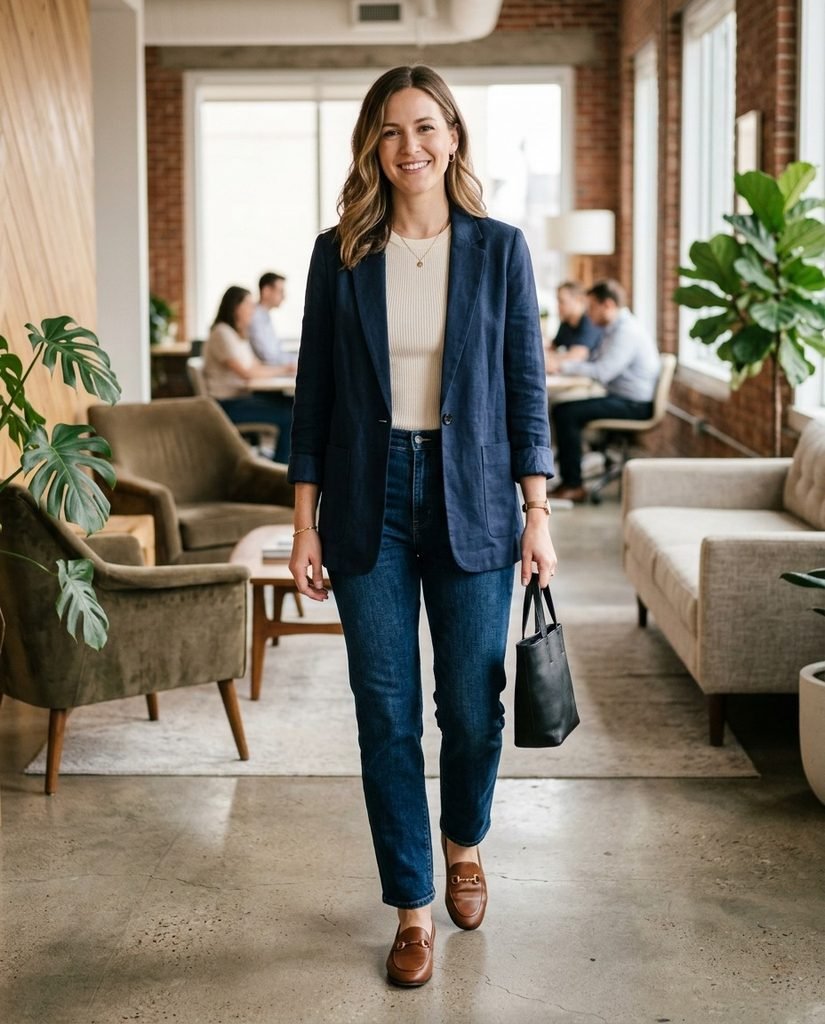
Often, yes—but “business casual” is not a universal American dress code. Workplace expectations vary considerably by employer, role, city, industry, and event.
If jeans are allowed, a blazer with dark straight denim, a simple knit, and loafers may sit comfortably inside the dress code. If denim isn’t appropriate, substitute chinos, ankle trousers, or another non-matching tailored pant.
The key distinction is casual versus careless. Distressed denim, graphic tees, athletic sneakers, shorts, or oversized silhouettes may be completely appropriate in one workplace and out of place in another.
Check the actual policy and observe what people in comparable roles wear rather than assuming one internet definition applies everywhere.
What Should You Look for When Buying a Casual Blazer?
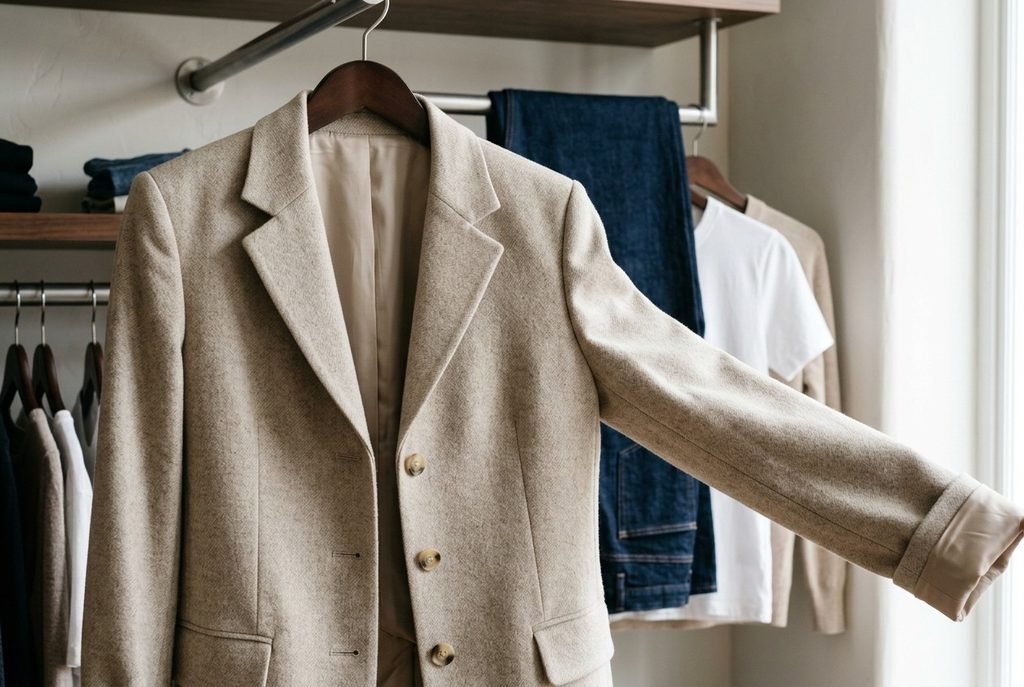
Start with your wardrobe, not the blazer rack.
A jacket is only versatile if it works with clothes you actually own.
Before buying, ask:
- What will go underneath it? Try the blazer over the tee, knit, or shirt you expect to wear—not only the store’s thinnest camisole.
- How structured are the shoulders? More padding generally produces a sharper shape; softer construction integrates more easily with relaxed clothes.
- Where does the hem land? Test it with your most-worn jeans and trousers, especially if they are wide-leg.
- Does it move? Reach forward, sit down, and cross your arms. Casual clothing isn’t useful if you can’t comfortably move in it.
- Can the sleeves be adjusted? Sleeve length can change the overall impression more than people expect.
- Will the color multiply outfits? Navy, gray, camel, brown, cream, and black are all potentially versatile. The best neutral is the one that works with your existing shoes, denim washes, and tops.
- What does the fabric require? Consider climate, lining, texture, wrinkle tolerance, and how the garment will be cleaned.
- Does the cost make sense per actual wear? A less expensive blazer you use constantly can be a better wardrobe decision than a premium jacket that only works with one pair of pants.
For US shoppers, the care label is worth checking before purchase. The Federal Trade Commission’s Care Labeling Rule requires covered textile apparel manufacturers and importers to provide regular care instructions, so a label can tell you whether the blazer fits your willingness to hand wash, machine wash, or pay for professional cleaning. FTC Care Labeling Rule
Fiber content matters as well, particularly when you’re comparing two jackets that look similar online. US textile labeling law generally requires covered textile products to identify constituent fibers and their percentages under applicable rules. FTC Textile Products Identification Act
Common Reasons a Casual Blazer Outfit Feels “Off”
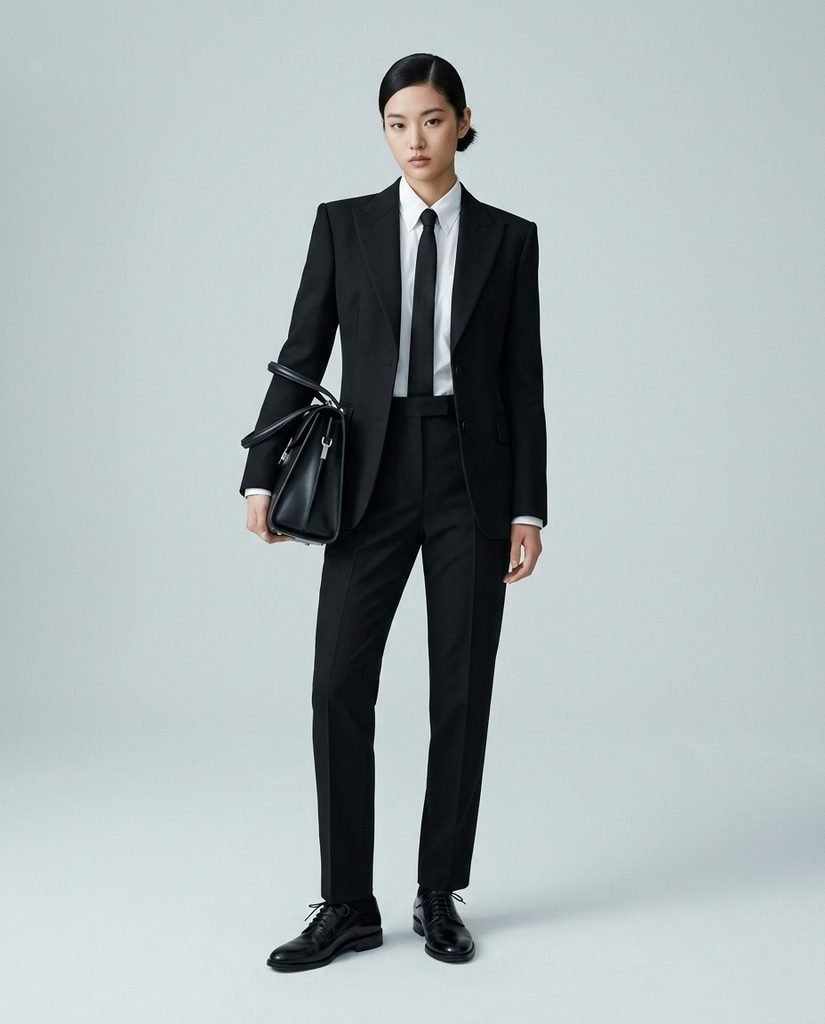
Sometimes the problem isn’t the blazer. It’s that every choice is pushing in the same direction.
Everything is formal. A tailored jacket, crisp blouse, pressed trousers, formal handbag, and polished dress shoes create a coherent look—but it probably isn’t casual. Relax one or two elements.
Everything is oversized. Volume can be stylish, but several large shapes may need a visual anchor such as a fitted inner layer or cleaner shoe.
The layers physically don’t fit. A thick sweater crammed into narrow sleeves creates pulling and bunching. Size the blazer for the layers you actually use.
The blazer looks accidentally separated from a suit. A very smooth jacket worn with nearly matching formal trousers can read as though the original suit pants went missing. Denim, contrasting texture, or clearly different trousers solve that quickly.
The shoes belong to another outfit. Footwear is one of the strongest formality signals. If a jeans-and-tee outfit suddenly feels too dressed up, examine the shoes before changing everything else.
You’re copying a silhouette you don’t enjoy. An oversized blazer isn’t mandatory. Neither are cropped jackets, sneakers, heels, skinny jeans, or wide-leg pants. Style works better when the clothes support how you actually want to move through the day.
Frequently Asked Questions
What do you wear with a blazer casually?
Pair a blazer with visibly relaxed pieces such as jeans, a crewneck T-shirt, tank, fine knit, sneakers, flats, or loose non-matching trousers. You only need a few casual signals to change the mood. If the blazer is highly structured, faded denim and simple footwear usually create more useful contrast than another tailored piece.
Can you wear a blazer with jeans?
Yes. Jeans and a blazer work because denim reduces the formality of tailoring. Straight-leg jeans are an easy starting point, but relaxed, wide-leg, cropped, and slim silhouettes can also work. Choose the jean shape according to the blazer’s length and volume, then use the shoe to decide whether the outfit feels more casual or polished.
What shoes go with a casual blazer?
Sneakers, loafers, flats, sandals, and ankle boots can all work. Sneakers provide the strongest casual signal; loafers make the outfit smarter; flats keep the silhouette clean; and boots add useful visual weight in cooler weather. Choose shoes in relation to the pants rather than treating the blazer as the only styling consideration.
Can you wear sneakers with a blazer?
Absolutely. A blazer with sneakers works particularly well when the rest of the outfit includes casual pieces such as denim, a T-shirt, chinos, or relaxed trousers. Minimal sneakers create the easiest balance. Chunkier sneakers can also work with oversized tailoring or wide pants when you want a more substantial silhouette.
How do you make a blazer look less formal?
Reduce the number of formal elements surrounding it. Swap a blouse for a tee, suit trousers for denim, pumps for sneakers, or a structured work bag for a casual crossbody. Softer shoulders, textured fabrics, rolled or pushed-up sleeves, and non-matching bottoms can also move a blazer away from a corporate appearance.
Should a casual blazer be oversized?
No. Oversized blazers are one option, not a requirement. A regular or slightly relaxed fit can be just as casual when paired with denim, tees, flats, or sneakers. Choose oversized tailoring if you enjoy additional volume and room for layers. If you prefer more definition, a straight or gently shaped blazer may suit your wardrobe better.
What color blazer is the most versatile?
There isn’t one universally best color because versatility depends on the rest of your closet. Navy works easily with denim, cream, gray, and many earth tones; black can move between casual and dressier outfits; gray is especially adaptable; and camel or brown works well with warm neutrals. Check your most-worn pants, tops, and shoes before choosing.
Final Take: Casual Blazer Outfits Are About Contrast
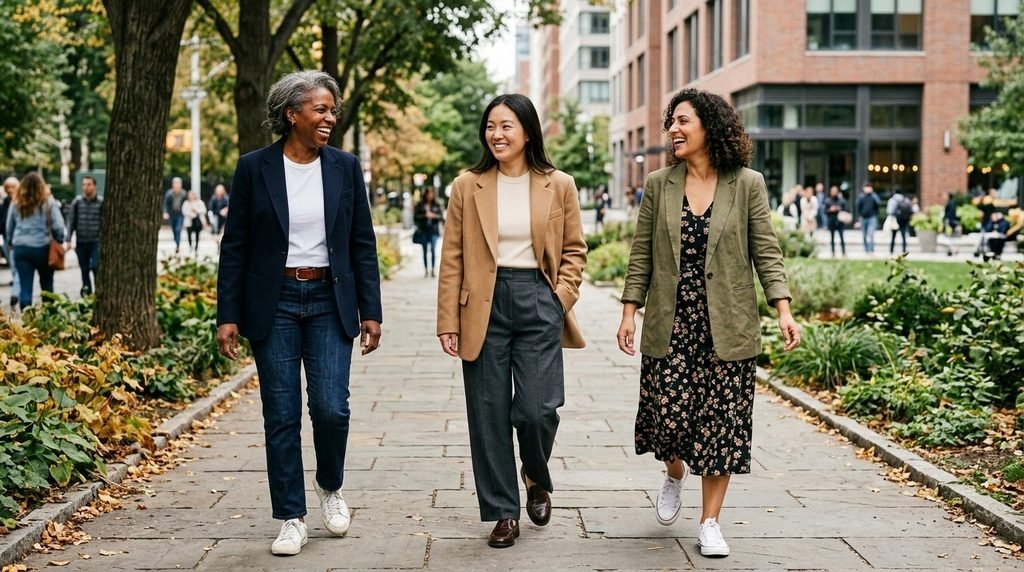
The most convincing Casual Blazer Outfits don’t depend on a secret styling trick. They work because tailored and relaxed elements are deliberately mixed.
Start with what you already own: a blazer, a simple top, your most comfortable jeans or trousers, and shoes that match the level of formality you want. Then pay attention to proportion. A softer shoulder, visible denim texture, practical shoe, or uncomplicated layer can change the entire mood.
A blazer doesn’t have to make you look more dressed up. Sometimes its job is simply to give an ordinary outfit a little more shape.
For more practical outfit-building ideas, keep FashionDew in your rotation as its fashion guide library comes online.