It’s 7:40 on a weekday morning. You have a meeting on the calendar, coffee in one hand, and a blazer that somehow looks more rumpled than it did when you hung it up. There isn’t time for ironing, and the thought of another dry-cleaning errand isn’t especially appealing.
That everyday problem explains the interest behind searches for Women’s Stretch Wrinkle Free Machine Washable Blaze. Most shoppers aren’t simply looking for a jacket that looks professional. They want something that can move through a normal day—commuting, sitting, typing, traveling, going to dinner—and still be relatively easy to care for.
The trick is knowing which features actually make a blazer practical and which product descriptions deserve a closer look.
Bottom Line
A women’s stretch, wrinkle-resistant, machine-washable blazer can be useful because it combines professional structure with easier movement and lower-maintenance care. The strongest options fit comfortably through the shoulders and armholes, recover well after stretching, resist everyday creasing, and include care instructions that work with your routine. “Machine washable” and “wrinkle-free,” however, should always be verified against the individual garment’s specifications and care label.
Why Easy-Care Blazers Fit Modern Wardrobes

A blazer has traditionally been one of the easiest ways to make an outfit look intentional. What has changed is what many women expect that blazer to do.
For everyday wear, a jacket may need to survive a car commute, several hours at a desk, a lunch meeting and an evening stop without demanding a wardrobe change. That puts comfort and maintenance much closer to the top of the buying checklist.
Easy-care construction can be particularly useful when you wear tailored clothing often. Instead of thinking only about how a blazer photographs while standing, consider how it behaves during the less glamorous 90% of the day.
Stretch and Everyday Movement

Stretch matters most when the blazer is doing something other than hanging neatly on your shoulders.
A blazer that fits while you’re standing may feel completely different once you reach forward to type, hold a steering wheel or lift your arms. Tight armholes, a rigid upper back or fabric that pulls across the shoulders can turn a seemingly correct size into an uncomfortable all-day choice.
Look beyond the presence of stretch fiber alone. Fabric recovery—how well the material returns toward its original shape after being stretched—also matters. A comfortable blazer shouldn’t immediately feel baggy at the elbows or lose its intended shape simply because you’ve spent several hours sitting.
Construction plays a role, too. Stretch in the outer fabric is less useful if a rigid lining restricts movement inside the jacket. For shoppers who spend long periods at a desk, the relationship between shell fabric, lining and armhole construction can matter as much as the fiber percentages listed on the tag.
Wrinkle Resistance and a Polished Look

“Wrinkle-resistant” and “wrinkle-free” are not necessarily interchangeable promises.
Wrinkle resistance generally describes a fabric or garment that is less prone to visible creasing under normal wear. “Wrinkle-free” sounds more absolute, but real-world performance can still vary according to fabric, construction, packing pressure, moisture, heat and how long the garment stays folded.
For commuters, the practical question is usually not, “Will this blazer literally never wrinkle?” A more useful question is, “Will it still look presentable after sitting in a car or at a desk?”
Travelers may have a tougher test. A jacket compressed under shoes and toiletries for eight hours faces very different conditions from one worn on a 30-minute commute. If packability is important, check product-specific information rather than relying on a wrinkle-related phrase alone.
Machine Washability and Maintenance
Machine washability can remove one of the biggest inconveniences associated with traditional tailoring: routine trips to the dry cleaner. But the phrase doesn’t mean you can automatically use any cycle, water temperature or dryer setting.
In the United States, the Federal Trade Commission’s Care Labeling Rule requires covered manufacturers and importers to provide regular care instructions for textile apparel. Washing instructions can address washing method, drying, ironing, bleaching and necessary warnings.
The useful takeaway for shoppers is simple: the actual care label outranks assumptions based on the words “machine washable.” The FTC’s Clothes Captioning care-labeling guide is a helpful reference, while the underlying requirements are available in 16 CFR Part 423.
What to Look for Before Choosing a Women’s Blazer
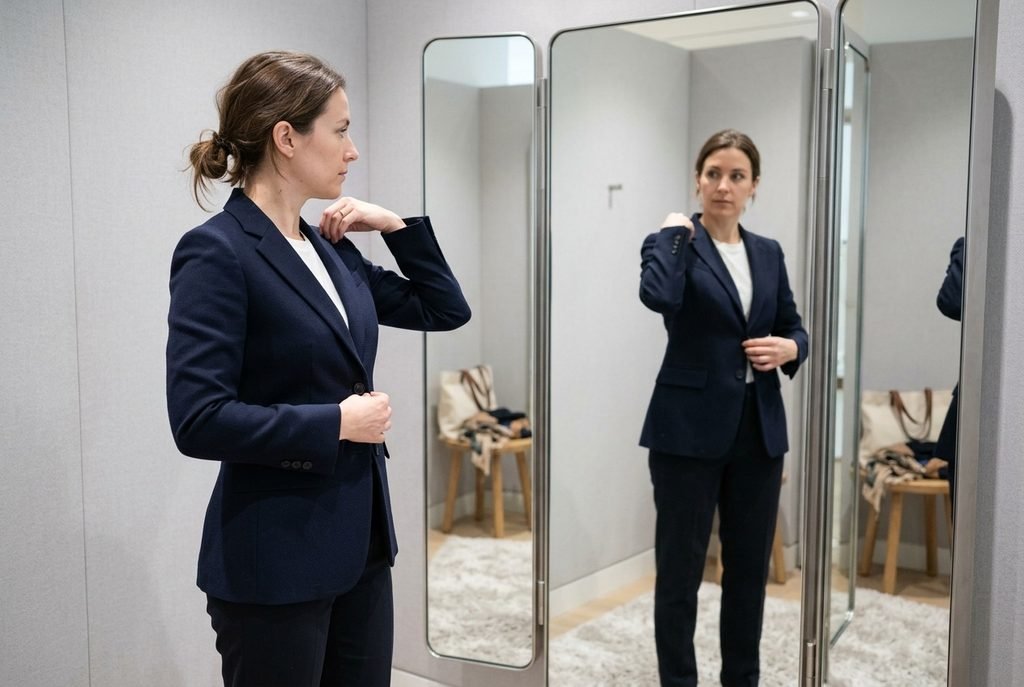
The best blazer for you depends on how and where you’ll wear it. Before buying, compare the details that affect real-life comfort and maintenance rather than focusing on the front-view silhouette alone.
| Buying factor | What to check | Why it matters |
| Shoulder fit | Seam placement, pulling or collapsing | The shoulders establish much of the jacket’s overall fit |
| Arm mobility | Reach forward, raise your arms and bend your elbows | Reveals restrictions that aren’t obvious while standing |
| Stretch | Fiber composition and how the fabric feels in motion | Influences comfort during sitting, driving and working |
| Recovery | Whether stretched areas return toward their original shape | Helps prevent a tired or bagged-out appearance |
| Lining | Full, partial, stretch or unlined construction | Can affect mobility, breathability and care |
| Closure | Button placement and pulling across the front | Shows whether the torso has adequate room |
| Length | Where the hem falls on your body | Changes proportions and outfit versatility |
| Pockets | Real vs. decorative; placement and bulk | Useful pockets can matter in work and travel wardrobes |
| Care | Complete product and label instructions | Determines how practical the blazer really is |
| Wrinkle performance | Product-specific claims and fabric behavior | Especially relevant for commuting and packing |
| Layering room | Fit over your usual blouse, knit or tee | Prevents buying a blazer that works only with one outfit |
| Seasonality | Fabric weight, lining and breathability | Helps determine how many months you’ll actually wear it |
If you arrived through the search phrase Women’s Stretch Wrinkle Free Machine Washable Blaze, these are the details worth translating that phrase into before purchasing.
Stretch vs. Traditional Blazers
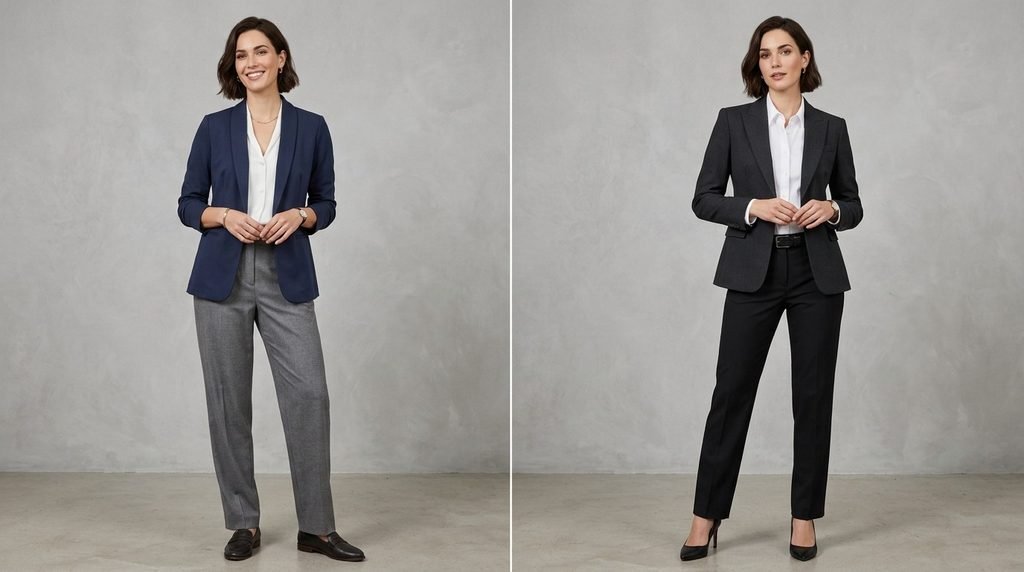
Neither construction is automatically better. The right choice depends on whether you prioritize movement and low-maintenance care or sharper traditional tailoring.
| Feature | Stretch/Easy-Care Blazer | Traditional Tailored Blazer | Why It Matters |
| Movement | Often designed to allow more give | May feel more structured or rigid | Important for desk work, commuting and travel |
| Appearance | Can range from soft tailoring to structured | Often emphasizes crisp shaping | Dress codes may favor different levels of structure |
| Care | Some styles are washable | Dry cleaning may be more common | Changes ongoing time and maintenance requirements |
| Packability | May recover more easily from everyday creasing | Structured construction can require careful packing | Relevant for frequent travelers |
| Layering | Flexible fabrics can feel forgiving | Precise tailoring may require more exact sizing | Matters with sweaters and long-sleeve tops |
| Formality | Excellent for many business-casual settings | Often preferred for highly formal tailoring | Your workplace or event determines the better choice |
| Longevity of shape | Depends heavily on fabric recovery and construction | Structured elements can hold a defined silhouette | Quality cannot be judged from “stretch” alone |
A stretch blazer may be more practical for a long workday when mobility and easy garment care matter more than rigid tailoring. A traditional blazer may still make more sense when you want pronounced structure, formal suiting or a fabric that isn’t intended to prioritize wash-at-home convenience.
How Should a Women’s Blazer Fit?
A women’s blazer should sit cleanly across the shoulders, provide enough room through the bust and upper back, and let you move your arms without significant pulling. Buttoning the jacket shouldn’t create strong horizontal strain lines, and the blazer should remain comfortable when you sit rather than fitting only in a standing pose.
Start at the shoulders because that area is difficult to disguise. The shoulder seam should generally align naturally with the intended edge of the shoulder unless the style is deliberately oversized or dropped.
Then check the front. Lapels should lie relatively flat rather than bowing dramatically away from the chest. If the jacket is designed to button, closing it should not make the fabric pull sharply into an “X” around the button.
Sleeve length is partly a styling choice. The more important question is whether the sleeve lets you bend your elbow and reach forward without making the entire jacket ride up uncomfortably.
Try a movement check before committing:
- Sit down with the blazer buttoned and unbuttoned.
- Reach forward as though you’re typing.
- Mimic holding a steering wheel.
- Cross your arms.
- Lift both arms to about shoulder height.
- Try the blazer over the type of layer you expect to wear underneath.
Petite and tall shoppers should pay attention to more than sleeve length. Button position, pocket placement, waist shaping and overall jacket length can all shift the visual proportions of a blazer.
Who Benefits Most From an Easy-Care Blazer?
Easy-care blazers are particularly useful for people who wear polished clothing frequently but don’t want every workwear piece to require specialized maintenance.
They can make sense for:
- Office professionals who alternate between meetings and desk work.
- Business travelers who want fewer high-maintenance pieces in a suitcase.
- Commuters who spend substantial time sitting or driving.
- Teachers and event staff who need freedom of movement throughout the day.
- Hybrid workers who want one layer that transitions easily from video calls to in-person plans.
- Capsule-wardrobe shoppers who expect individual pieces to work across several outfits.
- Anyone who simply prefers clothing that can fit into a normal home-care routine.
None of those situations automatically requires a stretch blazer. The advantage is that flexibility, wrinkle resistance and practical care can remove small points of friction from clothes you wear repeatedly.
Styling Ideas for Work and Beyond
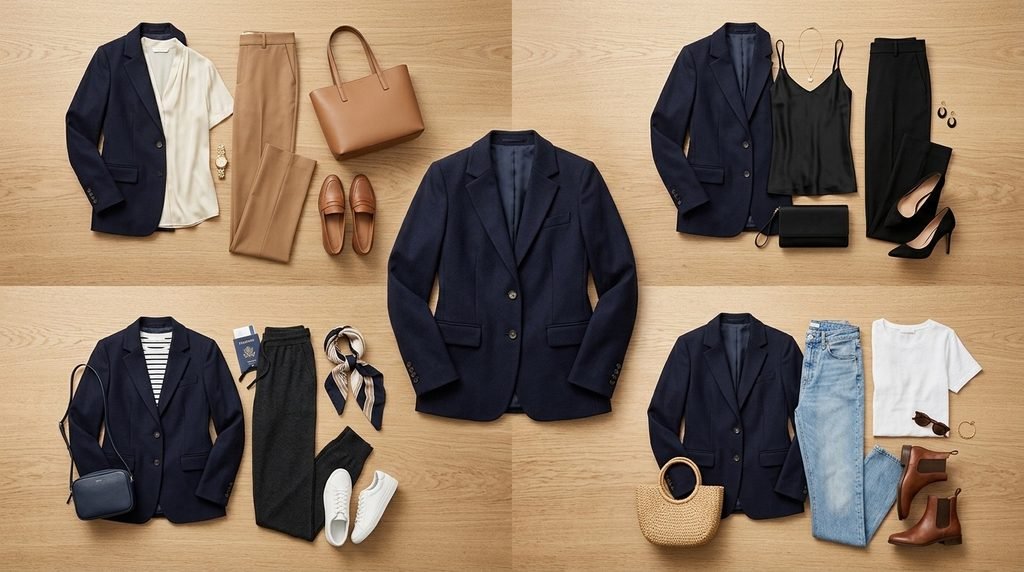
The most useful easy-care blazer isn’t necessarily the one that creates the most dramatic outfit. It’s the one that works with clothes you already reach for.
Business Casual
Pair a neutral blazer with straight-leg trousers, a simple knit shell and loafers or low heels. If the blazer has a softer construction, a tonal outfit underneath can keep the overall look polished without making it overly formal.
Travel Day

Try the blazer with a breathable tee or lightweight knit, dark trousers with comfortable movement and supportive shoes. Keep the jacket accessible rather than burying it deep in your luggage; you can wear it through the airport or place it on top of your bag’s contents.
Client Meeting
For a meeting where you want a little more structure, combine the blazer with tailored trousers or a midi skirt and a clean, uncomplicated top. A blazer with defined shoulders and a tidy lapel can provide visual polish even when its fabric offers stretch.
Dinner After Work
Swap the daytime blouse for a fitted knit or simple camisole where appropriate, add jewelry and change shoes. This is where an understated blazer often earns its place: the jacket doesn’t need to change for the outfit to feel different.
Smart Weekend Outfit
A blazer can also work over a plain tee with straight or relaxed jeans. Keeping the base outfit casual makes the structure of the jacket feel intentional rather than office-only.
What Machine Washable Really Means

Machine washable means the garment’s stated care procedure permits machine washing. It does not automatically mean every washer cycle, temperature, detergent, drying method or finishing technique is suitable.
That distinction matters with blazers because the garment may contain more than one material. The outer fabric, lining, interfacing, shoulder structure, buttons, trim and other components all have to function as a finished garment. FTC guidance specifically notes that care instructions must take components such as non-detachable linings, trim, buttons and zippers into account.
Before washing any blazer:
- Read the complete care label every time you buy a new style.
- Check the specified wash method and temperature.
- Follow any warnings about bleach, ironing or drying.
- Don’t assume tumble drying is permitted merely because machine washing is.
- Follow product-specific directions about fastening buttons, zippers or other closures if provided.
- Use air drying only when compatible with the garment’s instructions; don’t invent a gentler-sounding method that contradicts the label.
If you no longer have the care information, check the manufacturer’s verified instructions before experimenting.
Common Buying Mistakes

A good product description can help, but the fitting room—or a careful try-on after delivery—still tells you things a feature list cannot.
Common mistakes include:
- Buying for standing fit only. A jacket that photographs well may pull badly while driving or typing.
- Assuming any stretch means excellent mobility. Lining, armholes and pattern construction also influence movement.
- Ignoring recovery. Fabric that stretches comfortably but stays distorted afterward may not remain polished.
- Treating “wrinkle-free” as an absolute guarantee. Look for product-specific details and realistic expectations.
- Reading “machine washable” as “wash however you want.” The label’s complete instructions still apply.
- Sizing down to create waist definition. Excessive front pulling usually looks less tailored, not more.
- Forgetting your usual base layer. A blazer fitted over a thin tank may feel cramped over the knit you actually wear to work.
- Prioritizing sleeve length over shoulders. Sleeves can sometimes be addressed more easily than a fundamentally poor shoulder fit.
- Buying for one outfit. If wardrobe efficiency matters, picture at least three existing combinations before deciding.
When a Stretch, Wrinkle-Resistant Blazer May Not Be the Right Choice

Convenience has tradeoffs.
If you’re dressing for a highly formal professional environment, a structured traditional suit jacket may provide the sharper silhouette you prefer. Likewise, shoppers who love natural luxury fabrics, substantial tailoring or architectural shaping may decide that home washability simply isn’t the priority.
Stretch can also be unnecessary if you wear a blazer briefly and rarely sit or move extensively in it. And a very soft, flexible jacket may not deliver the crisp shoulder line someone expects from classic suiting.
There is also no reason to pay for easy-care features you won’t use. If you happily dry clean a favorite blazer a few times a year and love the way it fits, a washable replacement isn’t automatically an upgrade.
How FashionDew Can Help You Shop More Confidently
FashionDew can be a useful place to explore fashion options as its catalog develops, but shoppers should still judge every blazer from the details attached to that specific item.
Before purchasing any future FashionDew blazer, look for clear information about material composition, available sizing, lining, length, fit, closure and care. If a listing uses terms such as “stretch,” “wrinkle-free” or “machine washable,” product-specific details should help you understand exactly what those claims mean for that garment.
At the time this guide was prepared, FashionDew’s publicly accessible homepage displayed a “Coming Soon” message, so no specific FashionDew blazer inventory, prices, sizing system, shipping terms, returns policy or garment-care claims are asserted here.
Frequently Asked Questions
Are machine-washable blazers actually practical?
Yes, particularly for people who wear blazers frequently and prefer home garment care. Their usefulness depends on the exact care requirements, though. A blazer that can be machine washed but requires other careful handling may still need more attention than expected. Always compare the complete care label with your normal laundry routine before buying.
Do stretch blazers look professional?
They can. Professional appearance depends more on fit, construction, fabric surface, shoulder shape, lapels and overall condition than on the mere presence of stretch. A stretch blazer that lies cleanly through the shoulders and torso can work well in many office and business-casual settings, while more formal situations may call for traditional structured tailoring.
How do you keep a blazer from wrinkling while traveling?
Avoid compressing the blazer more than necessary, fold it along its natural construction lines, and place it where heavy items won’t crush it. Hang the jacket soon after arrival. If wrinkles remain, use only a steaming, pressing or ironing method compatible with the blazer’s care instructions; heat that works on one jacket may damage another.
What should you wear under a women’s blazer?
For work, common options include a knit shell, blouse, fine-gauge sweater or simple crew-neck top. A tee can make the blazer feel more relaxed for travel or weekends. Whatever you choose, try the blazer with a similar layer before buying so you know the sleeves, shoulders and armholes still provide comfortable movement.
Should a blazer feel tight when buttoned?
A close fit can be intentional, but strong pulling isn’t a sign of good tailoring. When a blazer is designed to close, the button should fasten without pronounced horizontal strain, distorted lapels or discomfort through the bust and waist. Sit down after buttoning it as well; a blazer can appear correct while standing and feel restrictive in actual use.
Are wrinkle-resistant blazers good for work?
They can be particularly practical for work because sitting, commuting and carrying bags can create creases during the day. Wrinkle resistance can help a blazer stay presentable with less intervention, but performance varies by garment. Treat the claim as one buying factor alongside fit, recovery, construction and care requirements rather than as a guarantee of a crease-free day.
Can a machine-washable blazer go in the dryer?
Only if its care instructions permit it. “Machine washable” describes the washing method and does not by itself authorize tumble drying. U.S. care-label requirements address drying instructions separately where applicable, so read the entire label rather than stopping after the washing line.
Final Takeaway
A practical blazer should work while you’re moving, not just while you’re looking in the mirror.
For most shoppers considering an easy-care option, focus first on shoulder fit and arm mobility, then look at fabric recovery, lining, wrinkle performance and the complete care instructions. Machine washability can make frequent blazer wear far easier to manage, while stretch can improve comfort during sitting and commuting—but neither feature replaces good construction or the right fit.
And keep expectations realistic. A stretch, wrinkle-resistant blazer may be ideal for a busy office week or carry-on wardrobe, while a traditionally tailored jacket may still win for formal suiting and crisp structure.
As FashionDew adds fashion content and shopping options, use this guide as your checklist for comparing what genuinely fits your wardrobe and routine. Explore the FashionDew