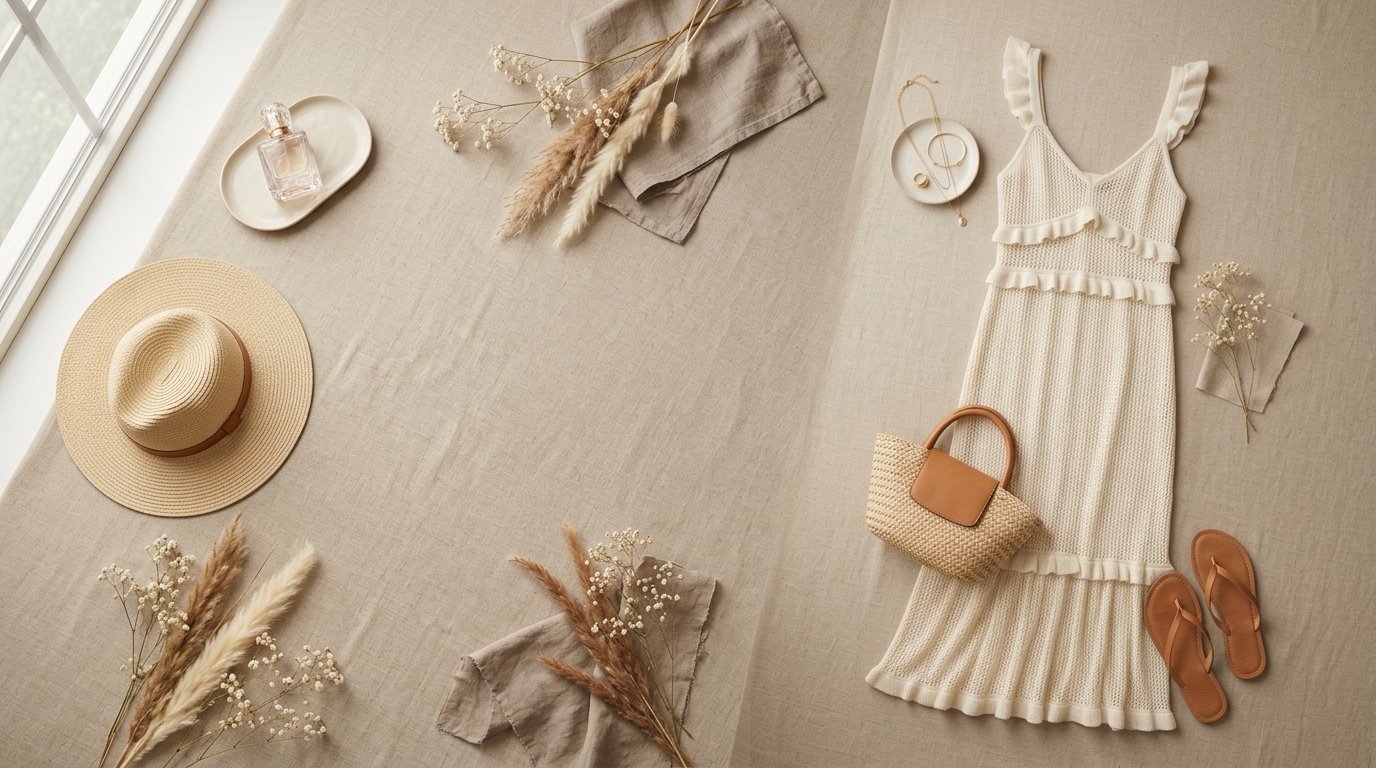
You’re looking at two nearly identical summer shirts. One is cotton; the other says lyocell on the fiber-content label. The lyocell shirt feels unusually smooth and fluid, but the product page is vague beyond words such as “soft” and “breathable.” Is it natural? Synthetic? Rayon? And does that unfamiliar fiber actually make the shirt a better buy?
Those are useful questions, because the word on the label tells you only part of the story.
In simple terms, lyocell is a manufactured fiber made by dissolving cellulose—usually obtained from wood pulp—and regenerating it into new fibers. Lyocell fabric is often soft, smooth, absorbent and fluid, but its comfort, durability, care needs and environmental profile depend on the way the fiber is sourced, processed, woven or knitted, finished and blended.
What Is Lyocell Fabric?
Lyocell is a regenerated cellulosic fiber. Its starting material is cellulose, a naturally occurring substance found in plants, but turning that cellulose into textile fiber requires an industrial manufacturing process.
That is why describing lyocell as simply “natural” or “synthetic” can be misleading. In the United States, the Federal Trade Commission classifies it as a manufactured fiber. Under the federal fiber definitions, the term lyocell can be used for regenerated cellulose produced through the specified direct-solvent process.
Lyocell sits in the broader man-made cellulosic fiber family alongside materials such as viscose and modal. Textile Exchange likewise categorizes lyocell, modal and viscose as man-made cellulosic fibers, typically produced from dissolved wood pulp.
Lyocell at a Glance
| Feature | Lyocell at a Glance |
| Fiber type | Manufactured, regenerated cellulosic fiber |
| Typical raw material | Cellulose, usually from wood pulp |
| Typical feel | Smooth, soft and often fluid or silky |
| Breathability | Often comfortable in warm weather, but air permeability depends heavily on fabric construction |
| Moisture handling | Absorbs moisture and can help move moisture away from the skin |
| Stretch | Not inherently elastic; stretch usually comes from knit construction or added elastane/spandex |
| Durability | Can have good fiber strength, though fabric construction and finishing matter |
| Wrinkling | Can crease; it is not naturally wrinkle-proof |
| Shrinkage | Possible, particularly with inappropriate heat or laundering |
| Common uses | Shirts, dresses, trousers, underwear, loungewear, denim and blends |
| Care | Follow the garment label; gentle washing and limited heat are often sensible |
| Key drawback | Performance and environmental claims vary considerably between garments and suppliers |
These are broad characteristics, not guarantees. Yarn structure, weave or knit, fabric weight, finishing, blends and garment construction can substantially change how a lyocell garment behaves.
What Is Lyocell Made From?
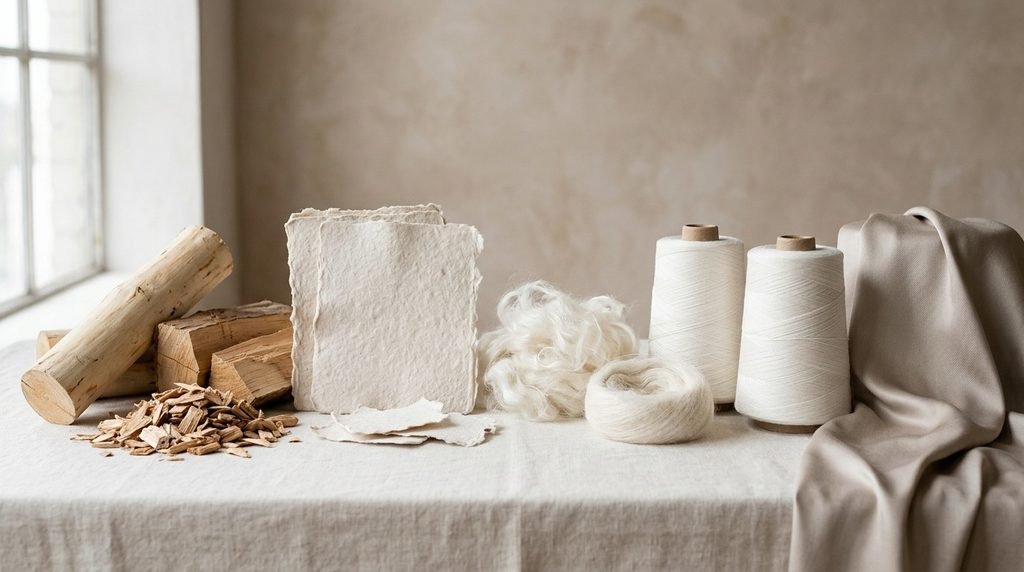
Most lyocell starts with wood-derived cellulose pulp. The exact tree species and forestry system vary by producer, so seeing “lyocell” on a clothing label doesn’t tell you where the wood came from.
Alternative feedstocks are also possible. Some manufacturers incorporate cellulose derived from textile waste or other sources. Textile Exchange notes, however, that man-made cellulosic fibers are still primarily wood-based, making responsible forest sourcing an important part of their environmental impact.
That distinction matters when you’re comparing two shirts that both say “100% lyocell.” Their fiber percentages may match while their raw-material sourcing and manufacturing systems do not.
How Lyocell Fabric Is Made
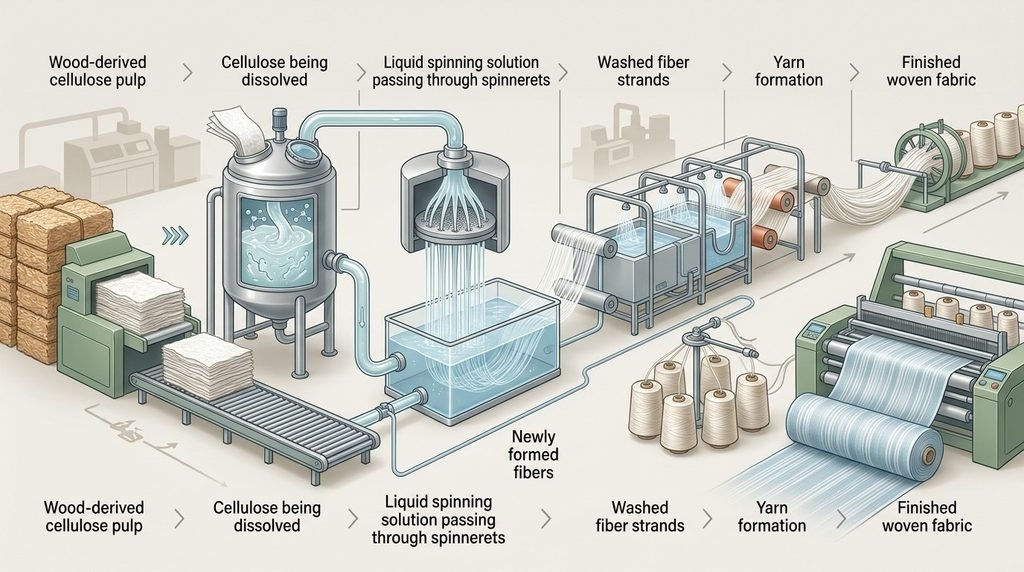
At a simplified level, lyocell production works like this:
- Cellulose pulp is prepared.
- The cellulose is dissolved in a solvent to create a spinning solution.
- The solution is pushed through very small openings called spinnerets, forming continuous strands.
- The cellulose is regenerated into solid fibers.
- The fibers are washed and finished, while solvent may be recovered and returned to the production system.
- The resulting fibers can be cut, spun into yarn and then knitted or woven into fabric.
N-methylmorpholine-N-oxide, usually shortened to NMMO, is widely associated with commercial lyocell production. Lenzing describes using NMMO to dissolve cellulose in its own lyocell process.
The important nuance: “lyocell” is a generic fiber description, not a promise that every manufacturer uses identical equipment, raw materials, energy sources or solvent-recovery efficiency.
What Does Lyocell Feel Like?
Lyocell often feels smooth, soft and relatively cool against the skin, with more fluid drape than a typical crisp cotton poplin. It can work especially well when designers want trousers, dresses or shirts to fall softly rather than hold a rigid shape.
But there is no single “lyocell feel.”
A lightweight lyocell jersey can feel soft and relaxed. A woven twill may have more body. Lyocell blended into denim can soften the hand and change its drape without making the finished fabric resemble a silky blouse.
Fiber is only one ingredient.
The yarn, fabric weight, knit or weave, finishing treatments and blend determine much of what you eventually touch. That is why judging a garment purely from a product-page phrase such as “made with lyocell” can be disappointing.
Lyocell fibers are also capable of taking up moisture. Lenzing specifically reports high moisture uptake for its TENCEL™ Lyocell fibers, although those performance claims apply to its branded fibers rather than automatically to every generic lyocell product.
Key Benefits of Lyocell
Lyocell has several qualities that make it useful in fashion:
- Softness: Many fabrics have a smooth surface that works well for clothing worn directly against the skin.
- Fluid drape: Lyocell can give dresses, wide-leg pants and shirts an elegant, less rigid silhouette.
- Moisture absorption: Its cellulosic structure can take up moisture, which may improve comfort in many everyday garments.
- Versatility: It can appear in everything from lightweight tops to denim.
- Useful blending properties: Designers combine it with cotton, polyester, wool or elastane to alter softness, structure, stretch, recovery or care.
- Good fiber strength: Properly manufactured lyocell can have relatively high tenacity among cellulosic fibers.
- Potential for responsible production: Certain lyocell supply chains use certified wood and high solvent recovery, though these details need to be verified rather than assumed.
One of its biggest advantages is versatility. Lyocell doesn’t force a garment into one particular aesthetic.
What Are the Disadvantages of Lyocell?
Lyocell is useful, but it isn’t a miracle fiber.
Potential drawbacks include:
- It can wrinkle. A fluid lyocell blouse may still show creasing after sitting or packing.
- It can shrink if mishandled. Heat and laundering conditions matter, especially for fabrics that weren’t heavily stabilized.
- It isn’t inherently stretchy. A 100% lyocell woven fabric shouldn’t be expected to recover like a fabric containing elastane.
- Some constructions need gentler care. The fiber may be strong while the particular fabric or garment remains delicate.
- Surface fibrillation can occur. Wet mechanical abrasion can cause tiny fibrils to develop on the surface of some lyocell fibers, potentially changing appearance or durability. Manufacturers use finishing and fiber-engineering techniques to control this phenomenon. A 2025 scientific review identifies fibrillation as an ongoing technical challenge for lyocell.
- The name alone proves very little about sustainability. Forestry, solvent management, energy, dyeing, finishing and blending all matter.
- It may carry a price premium. Whether that premium is worthwhile depends on the construction and overall quality of the garment, not the fiber name alone.
A $140 shirt isn’t automatically well made because “lyocell” appears prominently in the description. Check the seams, opacity, fabric weight, finishing and care requirements too.
Is Lyocell Breathable?
Lyocell can be very comfortable in breathable clothing, but the fiber itself does not determine how much air passes through a garment.
“Breathability” is often used loosely in fashion marketing. Two separate things matter:
Moisture behavior describes how a material interacts with perspiration and water vapor.
Air permeability describes how readily air can move through the fabric.
Lyocell’s moisture absorption can contribute to a comfortable microclimate, but a dense, heavyweight lyocell twill may allow less airflow than a loosely woven cotton fabric.
So when you’re shopping for hot weather, don’t stop at the fiber-content line. Look at the weight, thickness, weave or knit and overall garment design.
A loose lyocell camp shirt can be an excellent warm-weather option. A tightly woven lined lyocell jacket is a very different proposition.
Is Lyocell Good for Summer?
Yes, lyocell can be a strong summer fabric choice, particularly in lightweight, unlined and relatively open constructions.
Its smooth hand and moisture absorption can make warm-weather clothing feel comfortable. Dresses, relaxed trousers, short-sleeve shirts and lightweight tops are common examples.
The catch is construction.
A loose, lightweight garment usually has a better chance of feeling airy than a thick one, regardless of whether the label says lyocell, cotton or something else.
For humid conditions, also consider how quickly the whole fabric dries. Polyester performance fabrics, for example, absorb relatively little moisture and can be engineered for fast drying, which may be more useful for strenuous exercise even if you prefer lyocell for everyday summer clothing.
Does Lyocell Shrink or Wrinkle?
Does Lyocell Shrink?
Lyocell can shrink, so you shouldn’t treat it as shrink-proof. The amount depends on fabric construction, finishing, blending and laundering.
The FTC noted when approving the generic fiber name in 1996 that lyocell offered greater resistance to shrinkage than conventional rayon, but that is a comparison rather than a guarantee that every modern lyocell garment will remain dimensionally unchanged.
High washing or drying temperatures are rarely worth experimenting with on a garment you care about. Follow the label.
Does Lyocell Wrinkle?
Yes. Lyocell can wrinkle, although the degree varies considerably.
A heavier twill may hold its appearance differently from a lightweight woven shirt, while finishing treatments can also change crease behavior.
If wrinkle resistance is your top priority for a travel wardrobe, a well-engineered polyester blend may be more practical. If softness, drape and moisture absorption matter more, lyocell may win that particular trade-off.
Is Lyocell Sustainable?
Lyocell can be produced through comparatively responsible systems, but “lyocell” by itself is not a sustainability certification.
This is one of the most important points to understand about the fiber.
Where Lyocell Has Potential Advantages
Lyocell is made from cellulose, generally sourced from wood. Unlike conventional viscose production, the lyocell process can use a direct-solvent system in which the solvent is recovered and reused.
Textile Exchange describes closed-loop lyocell as an important option while also emphasizing that forest sourcing and land management remain environmental concerns for all wood-based man-made cellulosics. It recommends looking for responsible forestry sourcing such as FSC or PEFC certification.
Generic Lyocell vs. TENCEL™ Lyocell
This distinction is worth remembering at the store.
Lyocell is a generic fiber category. TENCEL™ is a trademark owned by Lenzing.
TENCEL™ is also not synonymous only with lyocell: Lenzing markets both TENCEL™ Lyocell and TENCEL™ Modal fibers.
For its TENCEL™ Lyocell process, Lenzing states that more than 99.8% of the processing solvent is recovered and returned to the production loop, and that its wood raw material comes from certified or controlled sources. These are manufacturer-specific claims and should not be automatically assigned to every garment labeled simply “lyocell.”
That distinction is a useful antidote to vague product-page language. If a retailer describes generic lyocell using a branded producer’s specific environmental statistics without proving the source, the claim deserves scrutiny.
What About Biodegradability?
Cellulose-based fibers can biodegrade under suitable conditions, but don’t assume a finished lyocell garment will simply disappear harmlessly in nature.
Lenzing states that specified LENZING™ Lyocell standard fibers have third-party TÜV Austria certifications for biodegradability and compostability in stated environments. That is evidence about those specified fibers under certification conditions—not proof about every generic lyocell fiber or finished garment.
A garment may also contain elastane, polyester thread, synthetic labels, coatings, dyes, prints or other finishes.
Fiber-level sustainability claims never describe the entire product lifecycle on their own.
Lyocell vs Other Popular Fabrics
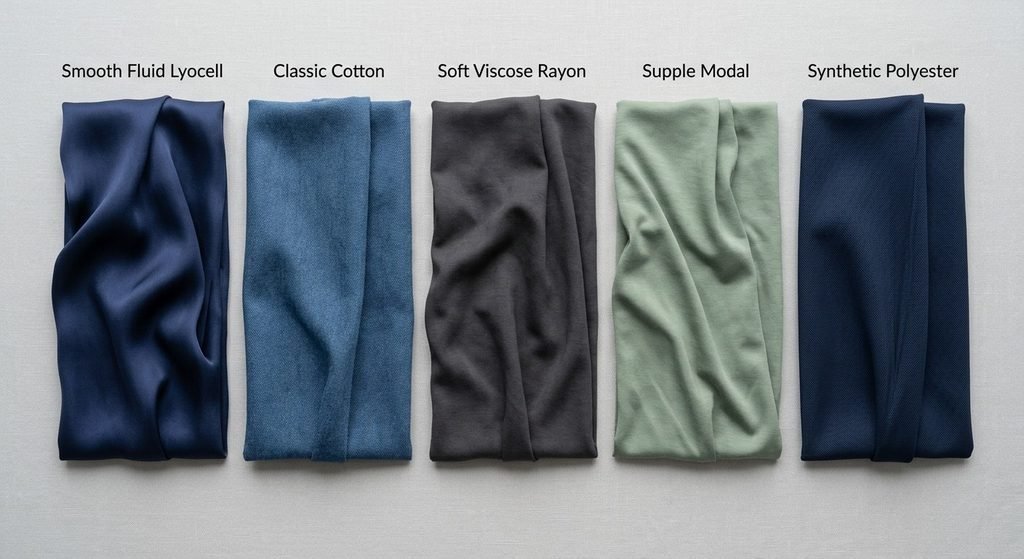
| Feature | Lyocell | Cotton | Viscose/Rayon | Modal | Polyester |
| Fiber type | Regenerated cellulose | Natural plant fiber | Regenerated cellulose | Regenerated cellulose | Synthetic fiber |
| Typical feel | Smooth, soft, fluid | From crisp to very soft | Soft and drapey | Typically very soft and supple | Highly variable |
| Moisture behavior | Absorbs moisture well | Absorbent | Absorbent | Absorbent | Low absorption; can be engineered to wick and dry quickly |
| Warm-weather comfort | Often good in lightweight constructions | Often good | Often good | Often good | Depends strongly on fabric engineering |
| Durability | Good fiber strength; surface fibrillation possible in some forms | Often durable, construction-dependent | Can require more care, particularly when wet | Construction and finish dependent | Often resilient and abrasion resistant |
| Wrinkle tendency | Moderate; varies | Moderate to high unless treated | Often creases | Varies | Generally lower |
| Stretch | Little inherent elasticity | Little inherent elasticity | Little inherent elasticity | Little inherent elasticity | Depends on construction; still not equivalent to elastane |
| Typical care | Label-dependent; avoid unnecessary heat | Often machine washable | Frequently gentle-care | Often gentle-care | Commonly easy-care but heat sensitive |
| Good for | Draped clothing, summer pieces, denim blends, underwear | Everyday basics, denim, shirting, structured casualwear | Draped dresses and blouses | Soft basics, underwear, tees | Activewear, travel, wrinkle-resistant clothing |
These comparisons describe common tendencies rather than fixed rules. Fiber blends, yarn structure, fabric construction, finishing and garment design can reverse some of the expected differences.
Lyocell vs Cotton
Both fibers absorb moisture, but the wearing experience can be noticeably different.
Cotton can produce everything from airy gauze to rigid denim and crisp poplin. Lyocell often brings a smoother hand and more fluid drape.
Choose cotton when you want a familiar, crisp or rugged fabric and easy-to-find care options.
Choose lyocell when softness and movement are priorities, especially for relaxed shirts, trousers or dresses.
A cotton-lyocell blend often tries to capture some of both: cotton’s familiar structure with additional softness and drape.
Lyocell vs Viscose/Rayon
Lyocell and viscose are both regenerated cellulose fibers, but their manufacturing routes differ.
Conventional viscose involves chemical derivatization of cellulose, while lyocell uses a direct-solvent approach. Lyocell can also offer strong wet-state performance and dimensional stability relative to traditional viscose.
That doesn’t make viscose obsolete. A well-made viscose dress can have exceptional fluidity and may cost less. The real comparison is between finished fabrics and garments—not just two fiber names.
Lyocell vs Modal
Lyocell and modal are related but not the same fiber.
Both belong to the regenerated-cellulose family. Modal is often used in very soft jersey basics, underwear and tops, while lyocell appears across a broader mix that includes denim and woven apparel as well as knits.
If a label says TENCEL™, look more closely: the branded fiber might be TENCEL™ Lyocell or TENCEL™ Modal.
Lyocell vs Polyester
Lyocell and polyester solve different problems.
Lyocell absorbs substantially more moisture and often provides the smooth, natural-feeling drape many shoppers want in everyday clothing.
Polyester absorbs relatively little moisture and is typically more wrinkle resistant. In technical activewear, engineered polyester fabrics can move liquid across the fabric and dry rapidly, which can make them more practical for high-intensity workouts.
For a fluid summer dress, lyocell may be the more appealing choice. For a packable running shirt that needs to dry quickly, polyester may make more sense.
Neither fiber wins every use case.
Where Is Lyocell Used in Fashion?
You’ll commonly find lyocell in:
- Dresses, especially fluid midi and maxi styles
- Button-down and camp shirts
- Blouses
- Wide-leg and relaxed trousers
- Jumpsuits
- T-shirts and soft jersey pieces
- Underwear
- Loungewear
- Lightweight jackets
- Denim, often blended with cotton
- Stretch garments, when combined with elastane
- Soft tailoring, where designers want movement rather than stiffness
The same fiber can look surprisingly different in each category.
That’s useful when shopping: instead of asking, “Do I like lyocell?” ask, “Do I like this particular lyocell fabric in this particular garment?”
How to Wash and Care for Lyocell
Always start with the garment’s care label. In the US, clothing manufacturers and importers are required to provide care instructions, and those instructions account for the finished product rather than the fiber in isolation.
If the label permits normal laundering, these conservative habits can help many lyocell garments last:
- Use a cool or cold, gentle wash when appropriate.
- Choose a mild detergent.
- Wash delicate pieces with similar fabrics rather than abrasive items such as heavy jeans with exposed hardware.
- Turning a garment inside out may reduce surface abrasion.
- Avoid wringing or aggressive twisting.
- Don’t automatically use chlorine bleach; follow the care label.
- Avoid unnecessarily high dryer temperatures.
- Air-dry or tumble dry on low only when the label permits it.
- Use a low or moderate iron setting according to the garment instructions.
- Reshape the garment after washing if needed.
Why so much emphasis on the label? Because a “70% lyocell, 30% linen” dress and a “95% lyocell, 5% elastane” knit top may need different handling even though lyocell dominates both.
The garment, not the fiber glossary, gets the final vote.
How to Shop for Lyocell Clothing
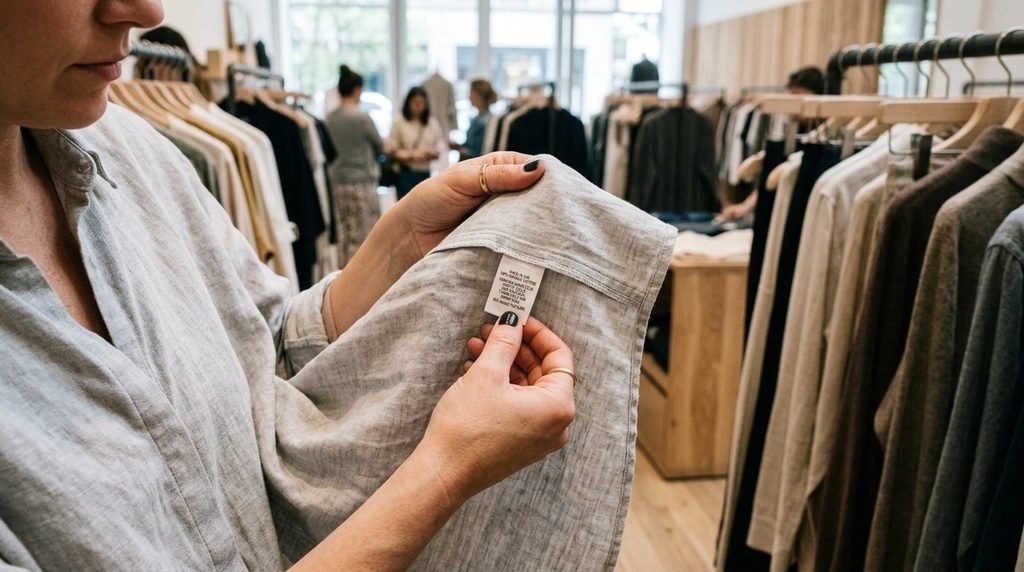
Before You Buy Lyocell Clothing, Check These 6 Things
1. Read the complete fiber percentage
There is no magic percentage of lyocell that makes clothing good.
A 100% lyocell garment will generally express more of the fiber’s characteristics, but construction still matters. A blend can be just as desirable when the other fibers serve a purpose.
2. Identify the other fibers
A cotton blend may add structure. Elastane adds stretch and recovery. Polyester can increase resilience or speed drying. Linen may add texture and a drier hand.
The blend is part of the design, not automatically a downgrade.
3. Look at fabric construction and weight
For summer clothing, a lightweight fabric and loose design may matter more than whether the garment contains 60% or 100% lyocell.
Zoom in on product photos. Look for terms such as jersey, twill, satin, chambray or denim.
4. Check the lining
A beautifully breathable outer fabric can feel far warmer if the garment is fully lined with a dense synthetic material.
This is particularly relevant for dresses, skirts, jackets and tailored pieces.
5. Read the care instructions before buying
If you know you’ll never hand-wash or air-dry clothing, don’t ignore a demanding care label because you like the fiber story.
Practical compatibility matters.
6. Investigate environmental claims and overall value
Look for specific information rather than phrases such as “green fabric” or “sustainable material.”
Useful questions include:
- Is the producer identified?
- Is the wood source certified or controlled?
- Is FSC or PEFC documentation mentioned?
- Does the manufacturer describe its solvent-recovery system?
- Is a biodegradability claim tied to a particular certification and fiber?
- Is the garment heavily blended with non-cellulosic fibers?
- Does the construction look good enough to justify the price?
Canopy’s Hot Button Report is one industry tool that evaluates man-made cellulosic producers on issues including forest sourcing, traceability and use of certified fiber.
For a shopper, you don’t need to audit a supply chain every time you buy a shirt. But the more ambitious the marketing claim, the more specific the evidence should be.
Is Lyocell Worth Buying?
Lyocell can absolutely be worth buying when its particular strengths match what you want from the garment.
You may especially like it if you prefer:
- smooth fabrics
- soft clothing worn against the skin
- relaxed or fluid silhouettes
- lightweight warm-weather pieces
- fabrics that absorb moisture
- softer denim or cotton blends
Another material may serve you better if you prioritize:
- maximum wrinkle resistance
- very fast drying for technical sports
- a crisp, structured hand
- minimal-care travel clothing
- rugged performance at the lowest possible price
And don’t buy a mediocre garment solely because it has an attractive fiber story.
The best shopping decision takes the fiber, fabric, construction, fit, care requirements, sourcing information, price and intended use into account.
Frequently Asked Questions About Lyocell
What is lyocell fabric?
Lyocell fabric is textile material made with regenerated cellulose fibers, usually originating from wood pulp. The cellulose is dissolved and then formed into new textile fibers. Lyocell is a manufactured cellulosic fiber rather than an unprocessed natural fiber such as cotton.
Is lyocell a natural fabric?
Not in the strict textile-labeling sense. Lyocell starts with naturally occurring cellulose, generally from wood, but the fiber is created through an industrial manufacturing process. The FTC classifies lyocell within manufactured fibers, making “regenerated cellulosic” a more accurate description than simply natural or synthetic.
Is lyocell breathable?
Lyocell can be very comfortable in breathable garments, but breathability depends on more than fiber content. Lightweight, loosely constructed lyocell fabrics may feel airy, while a heavy, tightly woven version may not. The fiber’s moisture absorption can also contribute to comfort.
Is lyocell better than cotton?
Neither is universally better. Lyocell often offers smoother texture and more fluid drape, while cotton can offer everything from airy softness to crisp structure and rugged denim performance. Choose according to the garment, construction, care requirements and the feeling you prefer.
Does lyocell shrink?
It can. Finishing, construction and laundering influence dimensional change. Avoid assuming a lyocell garment is shrink-proof, and follow its care label—particularly regarding washing and drying temperatures.
Does lyocell wrinkle easily?
Lyocell can wrinkle, but the amount varies by fabric. A lightweight woven blouse may crease more noticeably than a heavier or specially finished fabric. If very low wrinkling is essential, certain polyester or wrinkle-resistant blends may be more practical.
Is lyocell good for hot weather?
Often, yes. Lyocell’s smooth feel and moisture absorption can work well in summer clothes, especially when the fabric is lightweight and the garment is loose and unlined. Fabric weight and construction still matter more than the fiber name alone.
Is lyocell the same as TENCEL™?
No. Lyocell is a generic fiber category; TENCEL™ is Lenzing’s trademarked fiber brand. Lenzing sells TENCEL™ Lyocell, but the TENCEL™ brand also includes modal fibers. Generic lyocell from another producer should not automatically be described using TENCEL™-specific claims.
Is lyocell stretchy?
Lyocell fiber isn’t inherently elastic like elastane or spandex. A lyocell jersey may stretch because of its knitted construction, and lyocell garments containing elastane may have significant stretch and recovery. Always check the full composition.
Is lyocell sustainable?
It can be a comparatively responsible fiber when wood sourcing, chemical management, solvent recovery and energy use are well controlled, but the word “lyocell” alone doesn’t prove sustainability. Forestry practices, manufacturing, dyeing, finishing, blends, garment lifespan and end-of-life options all affect the final product’s environmental profile.
The Bottom Line
Lyocell is a regenerated cellulose fiber that can produce exceptionally soft, smooth and versatile clothing. It often works well for warm-weather pieces, draped garments, underwear and softer denim, while its moisture absorption is one reason it has become popular in comfort-focused fashion.
Its biggest lesson, though, goes beyond the fiber itself: the word “lyocell” on a label isn’t a quality score or an environmental certification.
Check the blend. Feel the fabric when possible. Look at its weight and construction. Read the care label. And when a brand makes sustainability claims, look for sourcing and manufacturing details that actually support them.
That kind of label-reading is exactly what FashionDew’s practical fabric guidance is intended to make easier: understanding what you’re buying before a promising material name makes the decision for you.